Blog

Explore expert insights and practical tips from Hallmark Surgical’s blog - covering innovations in surgical instruments and healthcare best practices to support clinicians in delivering safer, more efficient patient care.

Blue Eye Submucosal Injection Agent

Blue Eye versus Gelofusine

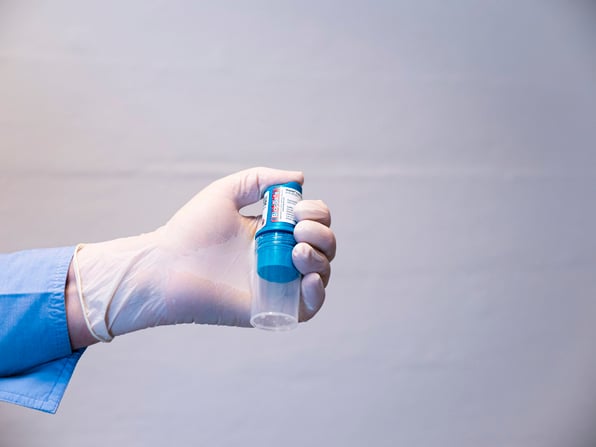
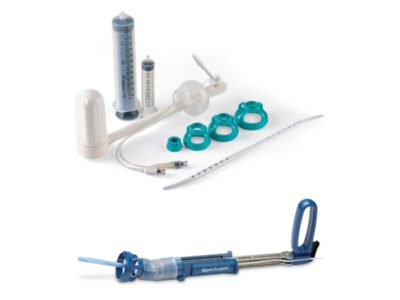
Did you know that you can now obtain a ready-to-use, pre-filled syringe of lifting agent for your endoscopic procedures? Blue Eye Submucosal Injection Agent is now available in New Zealand and is supplied by Hallmark Surgical. Most of you may be using the well-known and trusted Gelofusine, which has been on the market for many years. However, with Blue Eye available, you can speed up procedure times, as it is ready to use every time. Submucosal lifting agents are a frequently used product in endoscopic procedures for lifting gastrointestinal lesions prior to removal with a snare or endoscopic device. So why should you choose Blue Eye over standard Gelofusine? Gelofusine: Gelofusine is a gelatin-based IV plasma expander that creates a temporary lift in the submucosal layer of the gastrointestinal tract. It is often mixed with methylene blue to stain the submucosa and prevent bleeding. This is a great option; however, it requires several steps before it can be used. Draw the Gelofusine into a sterile bowl or container. Add a dye — typically methylene blue or indigo carmine — to help visualise the cushion during resection. Sometimes, adrenaline is added to help control bleeding or in the treatment of anaphylactic reactions. Manually mix the solution to ensure even distribution of dye. Draw the mixture into multiple syringes for injection. This process can be time-consuming, especially in high-volume areas where the item is used more frequently. It can also raise questions about sterility being compromised and where human error may occur, which ultimately affects quality. Blue Eye: Blue Eye is a ready-to-use solution that simplifies the procedure and minimises the risk of cross-contamination. Its mucosal elevation time is longer than that of standard saline solution, and it comes in a pre-filled syringe containing methylene blue and hyaluronic acid. Therefore, no mixing, drawing/adding up, or errors occur, and you simply open the pack and use it. If your consultant prefers to have adrenaline in their lifting agent, this does need to be added to the syringe prior to injecting BlueEye. To do this, 50 mL of Blue Eye needs to be transferred to a conical tube and then mixed with the hemostatic factor (such as adrenaline) at a concentration of 0.001% w/v in the solution. Why clinicians are choosing Blue Eye: ✅ Pre-filled, pre-mixed syringe — use straight from the pack ✅ Built-in blue dye ensures clear visualisation ✅ Fully sterile single-use format ✅ No additional dye, containers, or mixing required ✅ Reduces room setup and prep time ✅ Minimises infection risk from handling Overall, Gelofusine is the more cost-effective option; however, indirect costs are not always factored into the calculation. These include: Staff time spent preparing Additional dye procurement, such as methylene blue Potential contamination risks Procedure delays due to prep issues All these points add up to “cost”, which is why the benefits of Blue Eye often persuade people. Hallmark Surgical are now supplying Blue Eye in 5ml and 10ml, ready for purchase today : Blue Eye Submucosal Injection Agent

View More

5 reasons why you should consider using cassettes for your specimens

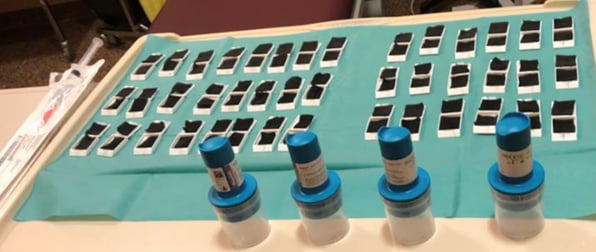
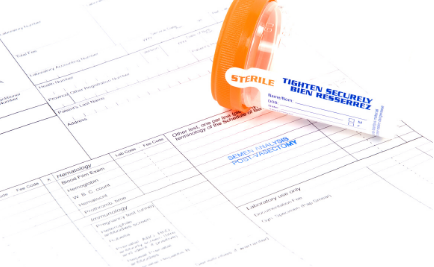
Millions of biopsies are handled in hospitals and clinics every day. Most specimens are placed directly into containers and sent to the lab for processing. This article will explain five reasons why you should consider using cassettes for your specimens and how it will improve your service to patients and the workflows in your department. Loss of samples: Every specimen sent to the lab is critical for comprehensive diagnosis and patient outcomes. However, in some cases, specimens can be lost in transit on the way to the laboratory. This is mainly when very small specimens are present in fields such as urology or gastroenterology. By using cassettes, you can secure all specimens eliminating the risk of the laboratory telling you an empty pot was received and no specimen was located. Multiple samples per container: In today’s environment, sustainability is a critical dialogue and is constantly in conversations around healthcare. However, no initiative must impact patient care. Cassettes allow you to reduce the number of histology pots you use in your department. By using cassettes, multiple specimens can be placed into the same container, knowing that all specimens will be analysed and nothing will be missed. Retrieval of samples from biopsy devices: Many nurses or consultants use the liquid in a pre-filled histology container to help retrieve samples from core biopsy needles, biopsy forceps or other devices. This is often done by dipping the device into the formalin and swirling it around to release the specimen. This practice brings formalin into direct contact with the device, which may be reused for subsequent specimen retrieval. Biopsy cassettes provide a safe alternative to this practice allowing retrieval of the specimen without any contact with the carcinogenic substance of formalin Set-up time and space: In high-use applications such as gastroenterology and urology, setup of specimen containers before procedures is a significant task taking up both time and space. Containers are commonly prepared by being set up in rows with the lids removed and ready for the samples. This dramatically increases the risk of formalin spillage with a container being knocked over and vapour exposure from the pots remaining open during the procedure. Cassettes provide an opportunity to set up for a procedure without any risk of spilling or inhaling formalin. Below is an image of a European department that uses cassettes for their specimens. Set-up time and space: In high-use applications such as gastroenterology and urology, setup of specimen containers before procedures is a significant task taking up both time and space. Containers are commonly prepared by being set up in rows with the lids removed and ready for the samples. This dramatically increases the risk of formalin spillage with a container being knocked over and vapour exposure from the pots remaining open during the procedure. Cassettes provide an opportunity to set up for a procedure without any risk of spilling or inhaling formalin. Below is an image of a European department that uses cassettes for their specimens. Improved traceability on biopsy location: The use of cassettes gives an opportunity to improve the traceability of biopsy location. In addition, each cassette can be coded and referenced to the documentation on specimens allowing for accuracy in diagnosis. So, there are five reasons why you should consider using cassettes for your specimen processing. If you would like to investigate the opportunities for your department or trial cassettes, please reach out to the team here at Hallmark Surgical.

View More
suction-liner

How to setup a Suction Liner Trolley

Learn how to setup Hallmark Surgical’s world class innovative suction management system for every level of healthcare including OR, Endoscopy, ICU, Outpatients, Clinics and Wards. Integrated suction connection on the liners providing lowest set-up time among all suction liners. Highly flexible, durable and compact suction liners reducing storage space and environmental waste. ‘Series’ installation enables automatic switch over to multiple suction canisters for high fluid applications. Robust, strong canister’s available in 1L, 1.5L, 2L and 3L sizes, with measurements readable from 270°. Fluid activated shut-off valve for safety during procedures. Available to be installed in Series, Rail Mounted, Wall mounted or trolley mounted for your perfect set-up. Request further information or a demo with your specific requirements now.

View More
speculum

LuxaSpec Self lighting Speculum vs Welch Allyn KleenSpec : Cost, Options and Features

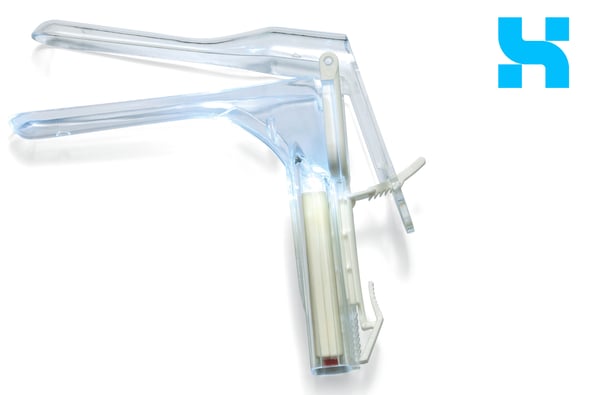
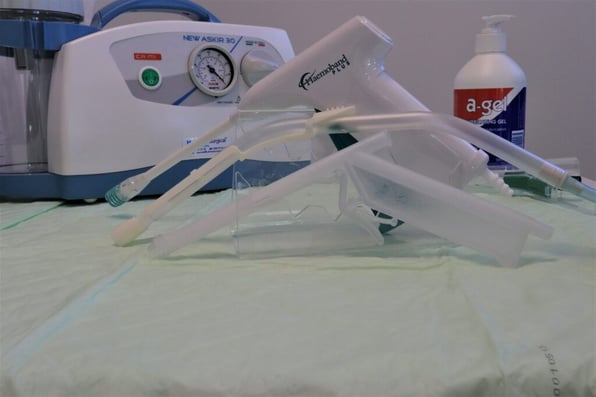
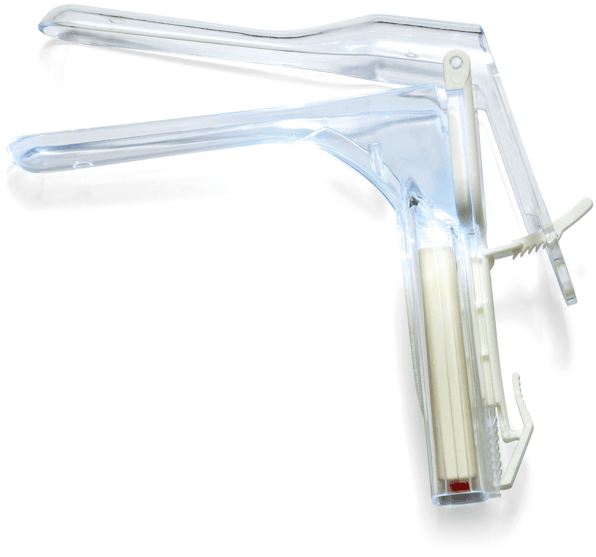
LuxaSpec Self-lighting Speculums are a top product in Hallmark Surgical’s gynaecology range. The LuxaSpec come in three sizes and is used by many public and private hospitals across New Zealand. But how do they compare to the well-known Welch Allyn KleenSpec? We have created an in-depth comparison of the LuxaSpec self-lighting and KleenSpec speculum to show you the key differences between the two. Let’s review how these compare. LuxaSpec Pros and Cons The Luxaspec has many positives: convenience, readiness for use, and excellent visibility. However, this also comes with disadvantages, such as price and sustainability. Pros: Convenience Self-lighting speculums are convenient as they have an inbuilt light in every speculum, being a completely self-contained unit. This eliminates the need for a separate light source that needs charging and prevents delays in your department, especially when waiting on reusable light sources from other clinicians. You will have a new light every time, so there is no need to worry about the light being dull, insufficient, or damaged. Excellent Visibility The LuxaSpec has an integrated light source that provides excellent illumination in the examination area. It reduces shadows or dark spots that can occur when using an older reusable light that has become dull. This allows for clear visualisation of the cervical and vaginal tissue. No charging required – ready to use Having an inbuilt light in LuxaSpec means no charging is required as it is designed for one-time use. The LuxaSpec ensures no delays between patients, and clinics can’t be interrupted by equipment failing or becoming lost. Cons: Price The LuxaSpec is generally more expensive than the KleenSpec because of the integrated light source. The LuxaSpec costs $4.96-$6.50 per unit, whereas the Kleen speculum costs $2.80-$5.00 per unit. This may be a higher cost; however, with LuxaSpec, your department does not need to purchase reusable light sources, which can cost between $300-$600. This may balance out the cost per use for you. Sustainability The main disadvantage of the SOLO self-lighting speculum is the impact on sustainability. The single-use light adds to your medical waste, which may not align with your sustainability goals. KleenSpec Pros and Cons The KleenSpec has positive aspects, such as economic efficiency, quality/reliability, and environmental benefits. However, it has some cons, such as initial investment and lack of convenience. Pros: Economic Efficiency The KleenSpec uses a reusable light source, which means there is a lower overall cost per examination. At the start, there is a larger investment to purchase these light sources or replace broken, lost or damaged lights. However, this will pay for itself over time. Therefore, it can be more cost-effective for high-volume practices such as hospitals. Quality and Reliability Welch Allyn has been the leader in speculums for many years. They are known for being a great product in the market. It has a clear acrylic which allows complete visualisation of the vaginal canal, and a wide, ergonomic handle that improves balance for easier manipulation during exams. Environmental Using the KleenSpec means you won’t be throwing out a battery light after each use, as it requires a reusable light source. This means there will be less waste and have a lower environmental impact. This can be an advantage to hospitals with sustainability goals. Cons: Initial Investment Using the KleenSpec requires an initial upfront investment in purchasing reusable light sources. These can range anywhere from $300-$600 per light source. There is also a need for charging stations, warranty and service expenses, and insurance. Reusable light sources can also lead to ongoing costs if broken, lost, or damaged. Therefore, this must also be considered when deciding between the two speculums. Lack of convenience. KleenSpec uses a reusable light that needs to be charged regularly. This can often lead to patient delays if the light has not been charged properly, forgetting to put on charge or misplacing the light source after use. Busy clinics may need to invest in multiple lights to ensure they have the necessary equipment for all patients. Conclusion The choice between the LuxaSpec and KleenSpec comes down to multiple factors such as convenience, cost, reliability and sustainability. Some things to consider are how many speculums you would be using each week. Do the speculums need to be portable? Are there enough light sources on hand? Are we at risk of losing lights that could interrupt our patient care? You want to ensure you have the best speculum on hand without compromising performance. For these reasons, many hospitals have now switched to the LuxaSpec speculum as their preferred choice. For more information on the LuxaSpec, please reach out to the team today.

View More
biopsafe

Top Six Issues with BiopSafe

As the exclusive distributor for BiopSafe here in New Zealand, Hallmark Surgical is passionate about the health and safety advantages of BiopSafe in eliminating your exposure to formalin in theatres and clinics. However, we realise that BiopSafe isn’t for everyone, and in this article, we will explain why BiopSafe may not be the solution for you. The top 6 issues with BiopSafe are: Cost Transportation Sizes Storage Constraints Specimen removal Sustainability 1. Cost BiopSafe does cost you more. The innovative way that BiopSafe increases safety by eliminating exposure to formalin comes at a price, and for some users, this increase may mean that they cannot justify using BiopSafe. Public Hospital theatres must invest approximately $12,000 – $35,000 annually to use BiopSafe for all specimens. Private hospitals would have to invest $7,000 – $20,000 annually. Read our “How much does BiopSafe cost?” blog to learn more about this point. The other consideration with the cost is that many of you are supplied your pots free of charge from the labs. With the increased cost of BiopSafe, labs may need to increase the cost of their tests or charge you a small proportion of the cost of BiopSafe to recoup their costs and make it viable for both parties. To help you understand the best process for trialling and implementing BiopSafe, download our ‘Implementation Process’ document today. If this level of investment in improving staff health and safety is something other than what you can justify, BiopSafe isn’t for you. 2. Transportation BiopSafe is best transported upright. Because of the way the formalin flows from the lid to the vial after the internal seal has been broken, if transported on its side or upside down, it may cause the formalin to flow back into the lid, exposing the biopsy and affecting the specimen integrity. BiopSafe is, therefore, best for customers who can ensure the safe transportation of the vials. From our experience, hospitals with labs on site have more control of transportation methods. However, any hospital willing to carefully package BiopSafe before transport can overcome this issue. This transportation issue isn’t limited to BiopSafe but applies to standard histology pots, albeit for a different reason. It is commonly known that standard histology pots not transported upright have high leakage rates. 3. Sizes BiopSafe is designed to cater for the more frequent smaller specimens. It is available in 20ml and 60ml sizes. According to specimen handling guidelines, BiopSafe can be used for up to 3 cubic centimetre specimens. BiopSafe doesn’t cater for larger specimens such as Breasts, Organs or Tumors. For this, you need to look at formalin management systems, such as fume extraction cabinets or sealed dispensing systems. Despite this, BiopSafe is designed to look after 100% of specimens in the clinic and up to 75% in the theatre. BiopSafe is for departments that want to eliminate most of their exposure to formalin, giving that added protection to your staff. 4. Storage Constraints BiopSafe’s secret is in the lid. All formalin is sealed inside the lid, allowing users to open the vial and place the specimen inside without being exposed to formalin. However, because of this, BiopSafe is about twice the height of a regular pre-filled histology container. This does mean that storage in your department before use and then in the laboratory after testing can be a constraint. This is another reason to include labs in your conversations early. 5. Specimen Removal It is known that some departments, particularly gastro departments dip their instruments into the formalin in specimen pots to release the biopsies into the pots. This is not a recommended practice as it not only brings devices into contact with the toxic substance of formalin but also aggravates the volatile gas, increasing airborne particles and exposure levels. As the BiopSafe vial is empty and there is no liquid in it, you cant swirl the instrument in the formalin to remove the specimen. This can be overcome by scrapping your device onto a small foam pad to assist in removing the specimen. 6. Sustainability Sustainability is becoming a significant focus for many users. BiopSafe has more plastic than regular formalin pots, which can disadvantage sustainability projects. Therefore, if sustainability is more important to your organisation than staff safety and meeting the recently revised formalin exposure limits updated by WorkSafe NZ, BiopSafe is not your solution. When reviewing a new product like BiopSafe, many questions arise, and we hope we have answered a few for you here. If the above issues with BiopSafe are manageable for your organisation, you can join hundreds of hospitals and clinics around the globe that are eliminating formalin exposure daily. If you would like to discuss a trial of BiopSafe in your organisation, please get in touch with the team today!

View More
reusable-instruments

Top Five Reusable Instruments Commonly Replaced

Have you ever wondered what the top replaced reusable instruments are in hospitals across New Zealand? Surgical instruments form the foundation of the healthcare system and are you used amongst all specialties. In this blog, we are going to discuss the five most commonly replaced reusable instruments in New Zealand hospitals. Ball and Socket Towel Forceps 13cm: Ball and socket towel forceps are some of New Zealand operating theatres’ most frequently used instruments. This instrument plays a crucial role in maintaining sterility during procedures. They are used to securely hold drapes or towels in place during surgery, ensuring a sterile field and preventing any movement. Why are they commonly replaced? They are used across virtually all surgical specialties and, therefore, are widely needed across the hospital, undergoing many sterilisation cycles. Frequently handled instruments can experience more manipulation than many other tools. Due to its repeated use of over-clamping, it can cause gradual teeth to wear down. It can also often get overlooked with drapes at the end of a procedure, meaning this instrument is commonly discarded or lost and, therefore, requires frequent replacement. 2. Crile Artery Forceps 14cm curved: Crile Artery Forceps are crucial for clamping and controlling blood flow during procedures, especially for clamping blood vessels or tissues before cauterisation or ligation. They require a precise and reliable grip and closure, making them a commonly replaced instrument. Why are they commonly replaced? Crile artery forceps can lead to serious complications if the clamping ability is not working correctly or there is any potential for cracks or damage caused by over-clamping. It is also used for various procedures, from delicate vessel clamping to general tissue handling, which creates a lot of pressure on the instrument. It is a high-volume product used several times within a single procedure and goes through the sterilisation process many times each week. Therefore, they are commonly replaced to ensure they don’t cause any damage and compromise patient safety. 3. Surgical Scissors sharp/blunt 12.5cm straight: Surgical scissors are used during operations to cut tissues, sutures, and dressings precisely. There are various types of surgical scissors, including Metzenbaum, Mayo, operating scissors and more. Why are they commonly replaced? Surgical scissors are commonly replaced because they can often lose their precise cutting edge even after being regularly sharpened. Repeated high-temperature autoclaving can affect the metal hardness and edge retention. Depending on how specialised the scissors are, they may need to be replaced more commonly and no longer suitable for their intended purpose. Some procedures will demand scissors more; plastic surgery often requires exceptional sharpness, whereas orthopedics may want the tougher material. 4. Gillies Tissue Forceps 15cm 1×2 teeth: Gillies tissue forceps are used to hold and manipulate delicate tissue. They are often used in plastic surgery, delicate dissection, and reconstructive procedures and are perfect for fine work. They have 1×2 teeth as well for a secure grip. Why are they commonly replaced? Gillies tissue forceps are often replaced because the teeth of the forcep must be accurately aligned, which can usually degrade after multiple uses. There is potential for damage as they are designed for delicate procedures and can cause tissue damage if misused or with too much force, especially on delicate tissues like vessels, nerves and bowel. They are also used across multiple specialties, increasing their use and requiring hospitals to purchase more. 5. Mosquito Haemostatic Forceps 12.5cm curved: During surgery, Mosquito haemostatic forceps are used to clamp and control bleeding, particularly of small blood vessels. Their precise design with a fine, narrow tip allows for working with smaller vessels in small spaces. They also have serrated jaws, providing a secure grip on the vessel. Why are they commonly replaced? Due to being used for delicate procedures, they can be commonly replaced due to wear and tear. They are also very small and fine, making them an easy instrument to be lost or mishandled. If there is any misalignment, it can compromise the vessel sealing and lead to intraoperative bleeding. Overall, Hallmark Surgical have found these five instruments to be the most commonly replaced each year. It often comes down to how many specialities they are used for, tip size, sterilisation and if they can get misplaced or thrown out. All five of these instruments are a part of our Rapid Reusables range and, therefore, are always in stock for immediate dispatch. If one of these key instruments becomes damaged or goes missing, Hallmark Surgical can replace this immediately! We also have a wide range of other instruments in our Rapid Reusables range, which you can view in our catalogue.

View More
kerrisons

Single Use Versus Reusable Kerrisons

Do you often have problems with your reusable kerrisons becoming dull and damaged or accumulating dried blood and bone residue? Did you know this can often lead to Healthcare Acquired Infections (HAIs), risking patient safety. These are significant risks – what other options are there? Did you know you can now purchase high-quality single-use Kerrisons? You may be thinking that if I go with a single-use kerrison, this will have a significant cost and a higher impact on the environment. Those are two excellent points. However, I am going to discuss why single-use kerrisons are a safe and easy option for you, even if you have them as a backup in your department. The key points throughout this blog that will be discussed are: Cost Sustainability Performance Sterilisation process Health risks Time Reusable Kerrisons: Pros: Cost: Reusable kerrisons allow for long-term cost-effectiveness. While the initial investment is high, if you have purchased a high-quality kerrison, it will likely last many procedures if adequately maintained. This results in a decreased cost per procedure. Sustainability: Reusable instruments are often deemed to have more of a significant environmental benefit. Less waste generation, better carbon footprint due to fewer manufacturing and transportation emissions, and reduced demand for raw materials and manufacturing processes. Performance: Expensive reusable kerrisons offer the highest standard of manufacturing processes, giving you the smoothest and most delicate cutting operation available. This means reusable kerrison’s are often preferred by surgeons despite some of the negatives associated with them. Cons: Sterilisation Process: The sterilisation process for reusable kerrisons involves multiple steps. This includes immediate post-surgical cleaning, which consists of removing any biological materials to remove debris and an autoclaving process at high temperatures to follow strict hospital infection control guidelines. This can also cause challenges such as instrument degradation due to repeated sterilisation and damage to the instrument. Health Risks: Reusable Kerrisons can accumulate bioburden, dried blood and bone residue over time. This can lead to Health Acquired Infections (HAIs), risking patient safety. Therefore, it is an excellent idea to have single-use kerrisons as a backup in your department to ensure a clean, sharp cut every time and guarantee sterility for all patients. Replacement Cost: In the event that your Reusable Kerrisons become damaged, broken, or lost, you are faced with significant replacement costs of between $2000-$3000 per instrument. This can put significant pressure on department budgets and result in departments having fewer Kerrison sets than are needed, limiting access for consultants. Single Use Kerrisons: Pros: Sterility and Infection Control: Single-use instruments offer guaranteed sterility and infection prevention. Each Kerrison is individually packed and sterilised, which eliminates any cross-contamination risks. Every kerrison opened is 100% sterile and has consistent quality for every use. It reduces potential surgical site infections and eliminates the concern for incomplete sterilisation. There is no need to chase up the sterile service team to determine where your kerrison is, as you have a new one each time. Cost: Single-use kerrisons provide an excellent low-cost alternative to reusable kerrisons. At a per-procedure cost of $170-$200, single-use kerrisons can be easily substituted during a procedure for a reusable kerrison that has become dull or damaged without a large impact on your budget. Performance: Single-use kerrisons allow for a brand new cutting edge for every procedure. This means you will have optimal sharpness and precision, meaning there is no degradation from repeated use. Single-use kerrisons also allow for more frequent material and manufacturing advancements. They have the potential for specialised coatings and enhanced designs. Cons: Manufacturing quality: As single-use kerrisons are manufactured to minimise cost, they often appear low-quality compared to high-cost reusable alternatives. The delicate, smooth operation of a reusable instrument is hard to replicate in a low-cost single-use device. Despite that, focusing on the single-use instrument has been put into a sharp cutting edge, and this has received positive feedback from consultants. Sustainability: The biggest drawback with single-use kerrisons is sustainability. Purchasing single-use kerrisons for patient safety and a sharp kerrison may look good. However, you may need help justifying the environmental impacts of disposing of the kerrison once used. This is a very fair statement to be concerned about; however, it is helpful for theatre teams to discuss this with sterile services as the environmental impacts of re-sterilising reusable instruments, including water and power use, strong cleaning chemical use, and sterile packaging disposal can be as significant as disposing of a single-use Kerrison. Conclusion: The choice between single-use and reusable kerrisons is not straightforward. Each has its pros and cons; therefore, it is essential to evaluate each factor to determine what is best for your department. The most successful method for departments is often a hybrid model, where you stock some single-use kerrisons as backups for your reusable fleet, allowing you to take advantage of the convenience of the single-use products, without sacrificing the benefits of reusable kerrisons. For more information on the single-use kerrisons, please get in touch with the team today.

View More
polyp-trap

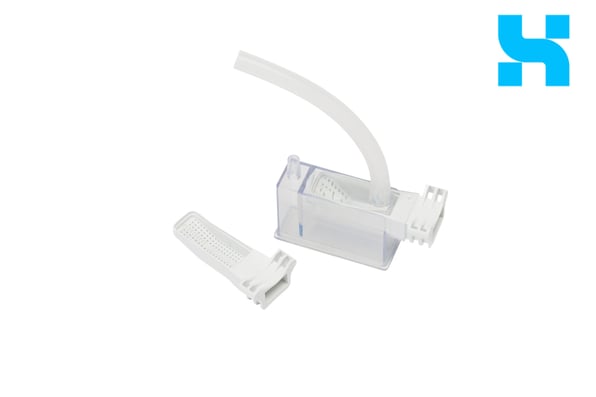
Hallmark Surgical Polyp Trap versus Steris Polyp Trap

What Polyp Trap is right for me? Are you weighing up your options and considering pricing, packaging and main features for polyp traps in your department? What are the pros and cons between the Hallmark Surgical polyp trap and the Steris polyp trap? Below, we have compiled a detailed blog to compare various aspects of the two commonly used polyp traps across New Zealand. Key features of the polyp traps include: Design/Construction Functionality and User Experience Packaging and Storage Cost Design/Construction: The Hallmark Surgical polyp trap has many excellent features, including the magnifying glass on the top, which quickly facilitates the inspection of collected specimens. It comes with two removable specimen strainers, which allows you to continue to use the device with minimal interruption to suction. The specimen strainer has a measurement scale allowing the nurse to record the size of the collected specimen for necessary records. The Steris polyp trap is similar to the Hallmark Surgical polyp trap because it has two removable polyp specimen collector strainer trays. Therefore, it can also collect multiple polyps with minimal suction interruption. The polyp trap has a clean design that cycles fluid into the central suction receptacle. It also has the same magnifying window, allowing direct visualisation once the specimen has been collected. As well as a measurement guide for specimen sizing. Functionality and User Experience: The Hallmark Surgical and Steris polyp traps have a straightforward design that makes them easy to use. This allows for efficient specimen collection during each procedure. They both have a singular chamber, which helps reduce the risk of specimen handling errors and makes the device easy to use. The clear construction of these polyp traps allows for easy visualisation of collected specimens during and after the procedure. Comparing the suction strength between the Hallmark Surgical and Steris polyp traps, the Steris polyp trap has a slightly higher suction strength of 510mm/Hg; however, it takes 4.35 seconds to reach this. Whereas the Hallmark Surgical polyp trap has a suction strength of 470mm/Hg but only takes 3.06 seconds to reach this. Therefore, the Steris polyp trap has an 8% higher suction strength but takes slightly longer to reach its top performance when placing a new basket in during the procedure, meaning a longer interruption to the suction flow. Packaging and Storage The Hallmark Surgical polyp trap comes in dispenser boxes of 24 units. All packaging is entirely cardboard, which is a significant sustainability benefit. Each box has the central trap unit, connection tube, x2 specimen strainers and instructions for use. The Steris polyp trap comes in plastic, clam-shell packaging; each box contains 25 units. Like the Hallmark Surgical polyp trap, it comes with the central trap unit, connection tube, x2 specimen strainers and IFUs. The Hallmark Surgical polyp trap individual boxes are smaller than the Steris plastic packaging and can be stacked, allowing for more accessible storage. Cost Analysis: The Hallmark Surgical polyp trap ranges between $10-$13 per unit. Whereas the Steris polyp trap ranges between $11-$14 per unit. Comparison: Overall, both the Hallmark Surgical and Steris polyp traps offer reliable polyp trap solutions for your department, with similar core functionality and a single chamber with two baskets. Hallmark Surgical offers a straightforward unit that is cost-effective and environmentally conscious through its cardboard packaging. Steris polyp trap also has a straightforward design for clear visibility and excellent suction strength. The choice between them often comes down to specific facility and personal preferences and factors such as packaging, cost, and storage. Therefore, experimenting and trialling the different polyp traps to figure out which one is right for you is recommended, but we hope this detailed explanation between the two makes your decision easier. For more information on the Hallmark Surgical polyp trap, please get in touch with the team today.

View More

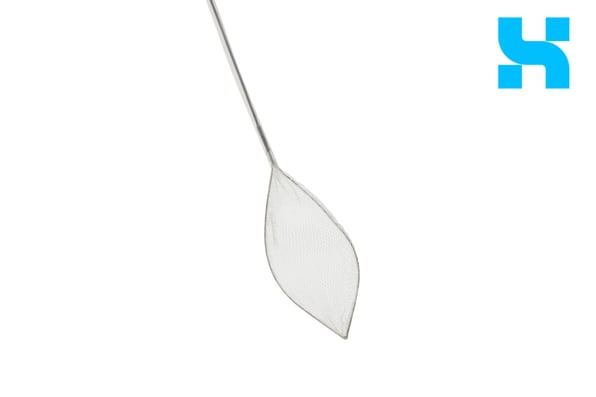
G-Flex Captiva Retrieval Net vs Steris RothNet

What are the main differences between the G-Flex Captiva Retrieval Net and the Steris RothNet? You may be wondering what the advantages and disadvantages are of each, so we have put together a detailed comparison to help you decide which one is right for you. This will include the pros, cons, key features and pricing. The key features of a Retrieval Net include: Rotation Handle design/ease of use Net sizes Net material Pricing Packaging Rotation: The Captiva net has a unique smooth rotatable feature for precise positioning and orientation. This enhances maneuverability so the surgeon can easily access the foreign body without shifting the patient or the scope. This is used in situations involving an excised polyp, tissue specimen, and challenging foreign bodies. All four sizes of the G-Flex Captiva nets have this feature, which is a significant advantage for both the surgeon and the patient because of its ease of use. The Roth Net is available in seven different styles, and one of the nets has a 360-degree controlled rotation, which is their Roth Net retriever – 360. This is a 3.0 x 5.0cm net, which addresses most foreign body, food bolus, and tissue retrieval procedures. This feature is excellent in retroflex or tortuous positions. However, if a larger net or mini net needs to be used, which is not available with 360-degree rotation, the surgeon may be required to move the patient or the scope for better access. This, therefore, limits RothNet’s usability for clinicians. Therefore, having this rotation feature is excellent for standard or trickier procedures, and G-Flex’s range offers this as standard. Handle design/ease of use: The G-Flex Captiva Retrieval Net handle design is excellent and easy to use. The Captiva has an ergonomic sliding handle with a thumb ring design for one-handed operation, allowing the device to open and close smoothly. When the handle has been fully opened, it sits securely, allowing the net to stay in place. Its unique smooth rotatable feature is also very simple to use, as you place one hand on the thumb ring and turn the handle with your other hand. This makes it easy for both surgeons and nurses to use. The RothNet has a similar design to the Captiva. Having a lightweight and ergonomic handle makes it easy for the surgeon or nurse to open and close the device with one hand. When testing the RothNet, one difference was noticed: when opened out, the strength of the outer wire ring is reduced compared to Captiva, meaning the net doesn’t stay locked in place. Often, the net retracts slightly into the sheath, reducing the aperture and requiring the user to retain pressure on the handle. Net Sizes: The Captiva retrieval net is available in four sizes for flexibility for different procedures and endoscope types: 160cm length, 20 x 50mm loop: Oval shape 230cm length, 30 x 60mm loop: Oval shape 120cm length, 20 x 50mm loop: Oval shape 230cm length, 30mm loop: Hexagonal shape All net sizes are rotatable and available in adult and pediatric. The RothNet is available in seven sizes, from small polyp retrieval to larger foreign body removal: 360: Net size: 3.0cm x 5.0cm Length: 230cm Maxi: Net size: 4.0cm x 8.0cm Length: 160cm Platinum retriever universal: Net size: 4.0cm x 5.5cm Length: 230cm Select: Net size: 3.0cm x 6.0cm. Length: 230cm Standard: Net size: 3.0cm x 6.0cm Length: 230cm Mini: Net size: 2.0cm x 4.5cm. Length: 160cm Enteroscope: Net size: 3.0cm x 6.0cm. Length: 350cm Therefore, you can see that RothNet offers a wider range of net sizes than Captiva. However, only one net is rotatable. Net material: The Captiva Retrieval net material is soft and delivered with a highly resistant network for compression into small diameters and expansion to full size when deployed. The net is coiled around the outside, preventing any tears from spreading around the outside of the net when pressure is applied to retrieve foreign bodies. Hallmark Surgical has had lots of positive feedback on the net material compared to what is commonly used in New Zealand. The quality is excellent to ensure that polyps are preserved and not damaged compared to standard suction methods. The RothNet is a retrieval net with strong, durable nets that can be used in challenging esophageal food impactions, foreign body retrieval, tissue collection and polyp removal. The RothNet material is slightly rougher around the edges than the Captiva. Common feedback covers that this results in the net pulling away from the wire circumference, causing the holes in the net to expand. Customers have often told us that they prefer the net material of the Captiva compared to the RothNet due to its smoother and softer texture, making it easier to grab the specimen. Pricing: Although specific pricing is unknown with the RothNet range, this could vary from customer to customer. Feedback received from users suggests the RothNet range sits around $80.00 per unit in New Zealand. We see very few users utilising the RothNet 360 model, so this cost comparison relates to the most commonly used model in New Zealand, the Roth retriever select. It is likely the rotatable version is more expensive. The Captiva retrieval net range is between $85.00 and $100.00, and all models are rotatable. Packaging: The Captiva Retrieval Net is sterile packed and comes in boxes of 10 units. It packed into a steripeel pouch, has clear labelling with size, expiry date, and details for use. It is a mix of paper and plastic packaging, therefore being particularly sustainable. The RothNet comes in a plastic non-sterile pack and comes in boxes of five units. It is opened on the side of the packet by tearing the plastic along the perforated line. It has information similar to Captiva’s, such as size, expiration date, and details for use. Both packets are easy to open and store in your department. However, the Captiva is partly paper, which can be recycled, and being fully sterile makes it suitable for all requirements. Conclusion: Overall, both the G-Flex Captiva and Steris RothNet have many unique advantages for endoscopic retrieval procedures. The Captiva stands out with its 360-degree rotation in all net sizes, excellent quality net material, ergonomic thumb ring design, and sterile/sustainable packaging. This ensures ease of use for the surgeon, even when it comes to challenging retrievals. The Steris RothNet has a durable net, a wide variety of sizes and easy-to-open packaging, making it an excellent choice for polyp and foreign body removal. Choosing between the Captiva and RothNet will likely come down to personal preference and considering factors such as rotation, handle design, available sizes and packaging. Therefore, experimenting and trialling different nets may be right for you, but we hope this detailed explanation between the two makes your decision easier. For more information on the G-Flex Captiva Retrieval Net, please contact the team today or watch the video below showing the product.

View More

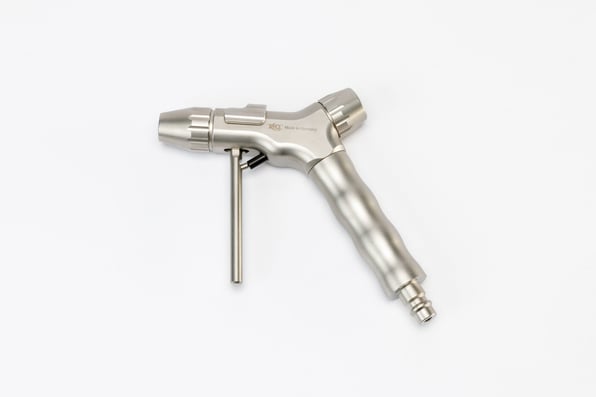
Should I consider upgrading the cleaning guns in my sterile service department?

Is your department always spending money on maintenance or having to work around broken equipment? Has it been several years since you have researched the best cleaning gun options for your department? Or maybe you haven’t upgraded your equipment for several years and now is the time to review your options. What you do in sterile service departments remains largely unseen and can be overlooked, however, is critical to the successful delivery of patient services. You deserve the best equipment you can get. So should you consider upgrading the cleaning guns in your department and if so, what is the best money can buy? Consideration 1: One issue you may be facing with your current cleaning guns is underperformance especially if the guns have not been replaced recently or are broken. With many reusable medical devices requiring both air and water to effectively clean lumens, or hard to access areas, not having workable cleaning guns can significantly impact your ability to quickly and efficiently process these devices with confidence. Investing in new cleaning guns has the ability to speed up your workflows and ensure you have confidence in the efficacy of your process. Consideration 2: If you are commonly spending money on maintenance costs such as repairing handles, plumbing connections or nozzles or having to find workarounds and other methods to clean your reusable medical devices due to your cleaning guns being broken or unusable, it is likely high time you consider replacing your equipment. Both the ongoing costs and impact on your workflows and processing times are likely to be costing your department significantly. Researching your options carefully and selecting equipment designed to last will be important to ensure you don’t have a repeat of these issues. Consideration 3: Have you thought about bacterial build-up in your guns? In most departments, guns have been used for an extended period across a wide range of devices with limited cleaning of the gun itself having taken place. This significantly increases the risk of secondary infection and is a major reason to upgrade your guns. What is the best money can buy: Hallmark Surgical’s recently launched range of RFQ cleaning guns is paving the way forward in a new era of health and safety in sterile departments across the country. The RFQ range of air & water guns is manufactured in Tuttlingen, Germany from 316/1.4404 grade Stainless Steel – some of the highest & hardest strength stainless steel available. The difference between the RFQ gun range and the traditional plastic or aluminium gun lies in the manufacturing and quality of materials used. The barrel, handle, shaft and trigger are all constructed from the same 316/1.4404 stainless steel for ultra-long-lasting use and there is no potential for the handle or tip to come off or get damaged as there is just 1 plastic component in the whole handpiece. The RFQ gun does away with continual costly repairs due to the quality of construction and materials used. With increasing concern around secondary infection, and bacterial buildup, Hallmark Surgical’s range of RFQ Cleaning Guns solves a very important and ongoing problem for almost all sterile service departments around the country. Secondary infection with most current air & water guns that can’t be disassembled or sterilized, presents serious risks to the health and safety of patients. A simple ‘wipe down’ isn’t enough to completely remove bacterial air and water particles that have built up over time. The range of RFQ cleaning guns can be completely disassembled, sterilised, and put back together – without any need for tools. This eliminates bacterial build up providing confidence that you are doing what you can to protect your patients. View our video on how to dismantle the RFQ cleaning guns here. Hallmark Surgical truly believes the RFQ cleaning gun range is the best money can buy for your department. If you are considering upgrading your cleaning guns today reach out to the team to arrange a demonstration or for further information.

View More
single-use-suctions

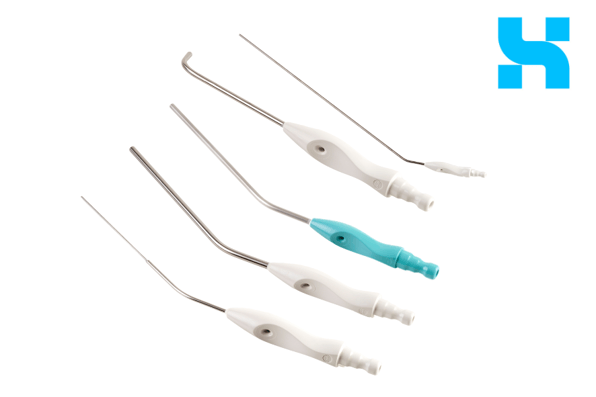
4 reasons to consider single-use suctions for your theatre department!

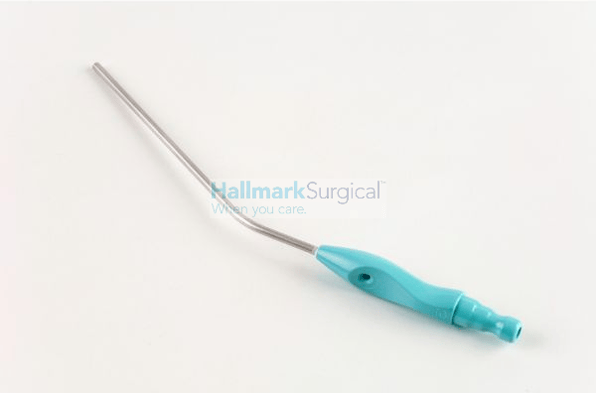
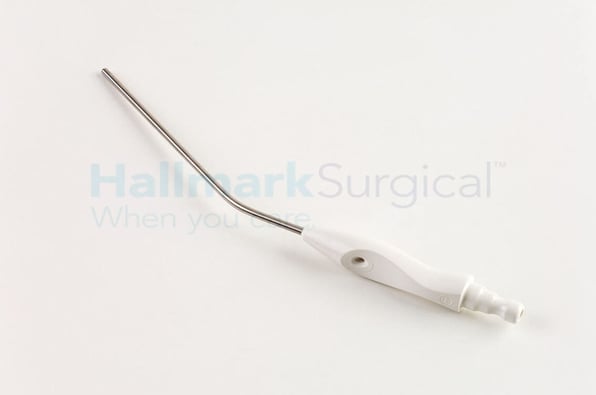
If you have chosen to read this blog, you are likely to be a frequent user of suction handles in your theatre department. Imagine a day when you have zero issues with suction handles – no dirty suctions, no jagged edges, no awkwardly bent suctions, and most importantly, no annoyed surgeons! We know that reusable suction handles are still widely used across many theatres. There are several scenarios caused by reusable suction handles in theatre, all of which can end up hurting patient outcomes, and in turn, your hospital’s reputation. Many theatre departments are now stocking a box or two single-use suction as a backup to reusable suction handles. They refer to it as their “insurance policy”. In this article, we will cover some of the issues with reusable suction handles, and how having single-use suctions available for your procedures can overcome these issues. Common issues with Reusable Suction Handles: Picture this. You’re in the middle of a busy day, everything is running smoothly. Your team are prepping your instrument sets for the next procedure. Then, one of the following scenarios happens: Scenario 1: When setting out your Frazier Suctions, your team notice your commonly used size has a severely jagged edge, which must have been caught by a drill or sharp instrument the last time it was used. Scenario 2: Your team notices that there is still some debris in the suction tube from previous procedures, posing significant infection control issues and risks. Scenario 3: The suction handle in the tray has been bent many times by your surgeons, all wanting to customize the suction to their personal preference. This has rendered the suction almost unusable, with blockage during your procedure inevitable. All these scenarios are common occurrences in theatres around New Zealand and leave nursing teams with 3 possible options on how to deal with them. Option 1 – Just continue, despite the potential risks – In a busy environment, too often, it’s just easier to carry on. Consequence – As is obvious from the scenarios outlined above, the risk of carrying on includes adverse patient outcomes. With suctions not fit for purpose, or carrying possible cross-contamination risks, the patient outcomes could be significantly impacted, involving medical complications, surgical site infections, and a longer stay and recovery for your patient. Option 2 – Open a new tray to locate a suction handle that can be used for your procedure. Consequence – The most obvious consequence of opening a second tray is cost. Although the exact cost of sterilising a tray of instruments can vary depending on the instruments used, or the number of instruments in the tray, both time and actual cost are significant, normally over $150 per tray. In a world where hospital resources are maxed out, it can also mean that the last patient on your list of the day has to be cancelled as you have used two instrument sets for one surgery. This causes your team more work in rescheduling surgeries, more stress in prepping for your cases, and constantly puts pressure on your surgery waiting lists. Option 3 – Open a single-use suction from your sterile store. Consequence – This option stands out as the smart choice for your theatre teams. 1-2 minutes are needed to grab a suction from your sterile store, it increases your costs for the procedure by $15-30 depending on the suction chosen. However, you have entire confidence that patient outcomes are not being sacrificed, and you are uninterrupted in your surgery schedule keeping your teams, surgeons and patients happy. With several single-use suction options available on the market, the 4 reasons to consider single-use suctions for your theatre department are: Cost – Single-use suctions are the smart choice when it comes to cost. It is substantially more cost-effective than opening extra trays to secure workable instruments. Patient Outcomes – Single-use suctions give you peace of mind that no issues are caused during surgery such as infections, or trauma from jagged suction tips. Smooth workflows – Single-use suctions minimize blockage during surgery and allow your teams to focus on the case, rather than finding an acceptable reusable suction handle. Minimal delays – Single-use suctions allow you to quickly continue with your surgery schedule, minimizing delays for your surgeons and patients. Hallmark Surgical has been providing Eakin Surgical suction handles for over 15 years and has seen many hospitals benefit from stocking these products. If you would like to eliminate issues with your reusable suction handles today, reach out to the team to learn about how Eakin Suctions can make your life easier.

View More
biopsy-forceps

G-Flex versus Olympus EndoJaws versus Boston Radial Jaws: How do they compare?

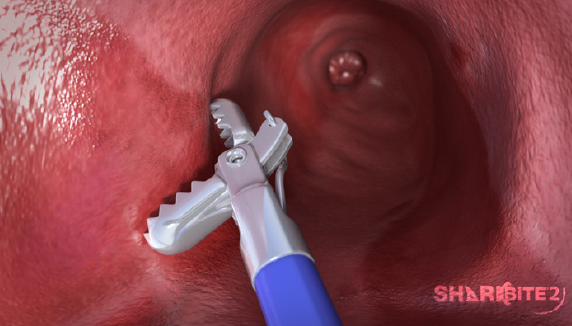
Biopsy Forceps are one of the staple instruments used in endoscopy suites around the country. What are your options, and which brand offers the best solutions to my needs? Below you will find a comparison between the two leading brands, Boston Scientific Radial Jaws and Olympus EndoJaws; and the recently launched G-Flex forceps. What is important in a Biopsy Forcep? In speaking to many of you in Endoscopy departments around New Zealand, we hear that the most important aspects of a biopsy forcep are: Bite precision and capacity Handle ergonomics Supply reliability Value for money Bite Precision and capacity: Biopsy forceps are designed to accurately secure tissue samples and specimens for histological analysis and diagnosis. As one of the most common items used in an endoscopy department, it needs to perform every time and retain its sharpness when used multiple times during a procedure. Boston Scientific is a global leader in endoscopic instruments and their Radial Jaw forceps is an excellent product used by many departments. All of their forceps come with what they call a Micro-Mesh Tooth design. This is a serrated tooth, engineered to provide a clean, precise bite. The Radial Jaw range covers three main sizes of forcep, standard capacity and large capacity forceps, which are compatible with a 2.8mm working channel, and Jumbo biopsy forceps which require a 3.2mm working channel. All sizes are available as a standard cup style or with a spike. Olympus is one of the most well-known medical brands globally and has a wide range of endoscopy instruments. The EndoJaw biopsy forcep range by Olympus has a comprehensive lineup of options, including their Alligator Jaw and Oval Jaw models. Oval jaw models have a straight cutting edge, whereas the Alligator jaw is similar to Boston’s Micro-Mesh Tooth design with serrations on the sides of the jaws. Once again, a wide range of sizes is available with the Olympus EndoJaw range, covering standard, large and extra-large capacity forceps, all available with or without a spike. G-Flex is a new player in the New Zealand market and has recently been launched by Hallmark Surgical. Headquartered in Belgium, with European manufacture, the G-Flex Biopsy Forceps have been gaining exceptional feedback from clinicians throughout New Zealand. The G-Flex range, similar to Olympus, offers the Sharkbite models, with serrated jaws, and standard models with straight cutting edges. Standard models are available in a 5mm Jaw, or a Large 7mm Jaw. The 7mm Jaw does come with a spike as an option too. Sharkbite is available in a standard 5.8mm Jaw, with or without spike, or a Jumbo 8mm Jaw. All brands are of US or European origin, meaning their reliability and sharpness throughout your procedure are excellent. Finding the right size and configuration of jaw design is something to focus on. Handle Ergonomics: Ensuring a device can be easily used is something that relies on good handle design. Both Boston Radial Jaws and Olympus EndoJaws have handle designs with stoppers on either end of the finger grip, as per the below image. The G-Flex forcep incorporate a handle design with full finger loops, which is more similar to what would be seen in other common instruments, such as snares. As Biopsy Forceps are a non-rotable device, either design is ergonomic for use in the endoscopy department. Which style you choose would come down to personal preference. Supply Reliability: As one of the most common items used in your department, you need the piece of mind that biopsy forceps will be there when you need them. Boston, Olympus and G-Flex are all sourced from stable manufacturing countries in the US, Europe and Southeast Asia, ensuring that there is minimal disruption to raw material supply. Along with this, all three brands are well represented here in New Zealand with stock available at short notice. Hallmark Surgical does offer a zero-backorder guarantee for the G-Flex product range, ensuring that your exact demands are calculated into New Zealand based stock holding and you have access to stock with overnight delivery on demand anywhere in the country. As a family-based, New Zealand owned and operated supplier of gastroenterology instrumentation, Hallmark Surgical has the ability to closely understand your department and requirements, and ensure your needs are met. Value for money: Although the exact pricing of Boston Radial Jaws and Olympus EndoJaws is not known, the premium biopsy forceps on the market tend to range in price between $15-$25 per forcep, depending on the size of your organisation or what contracts you may have in place. We refer to Boston, Olympus and G-Flex as premium options in comparison to the growing number of cheaper alternatives now on the market. Cheaper alternatives have been growing in popularity here in New Zealand over the last 5 years, but we receive many comments from those who have tried these products confirming that the points discussed above such as Bite Precision and Capacity, durability, Handle Ergonomics, and Supply Reliability can be significantly compromised, meaning that a cheaper product doesn’t present more value. It is up to you and your department as to what you prioritise and whether a trusted premium product that is available and works every time is more important than outright cost. We hope this overview has provided some value and look forward to discussing your needs with you further. To review or trial the G-Flex biopsy forcep range, please reach out to one of the team today. Click here to view the G-Flex range

View More
bipolar-forceps

Single Use vs Reusable Bipolar Forceps - Pros & Cons, Cost & Options

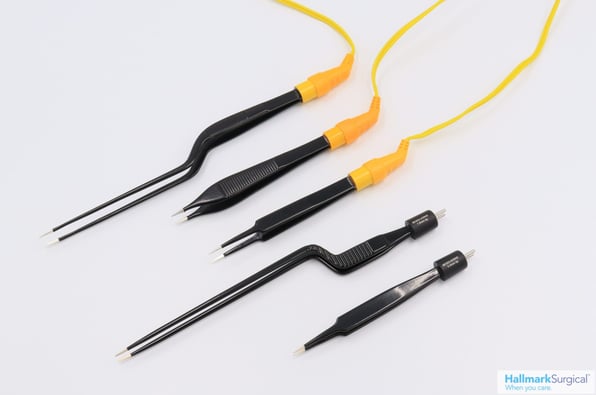
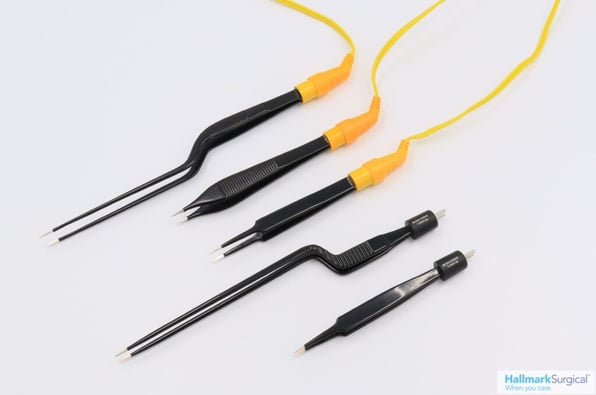
Bip olar Forceps are a staple instrument in operating theatres and clinics around New Zealand. Hallmark Surgical has been providing electrosurgical products including Bipolar forceps for over 15 years. One question we often get asked is, “You stock both Single-Use and Reusable Bipolar Forceps, but which one is right for me”? Below we will give you a comparison, featuring the pros/cons, costs and o ptions of both reusable and single-use Bipolar Forceps to help decide what is best for you. Reusable Bipolar Forceps Pros and Cons Reusable Bipolar Forceps have many advantages but also come at an expense, so let’s take a look at the pros and cons: Pros: Variety: Reusable Forceps have a wide range of tip sizes, lengths and materials which means it is the range of choice for surgeons or organisations who need specialist forceps. This may be an Ophthalmic Surgeon who requires a micro-angled bipolar forcep, or a Spinal Surgeon requiring a long fine bayonet forcep with non-stick tips. For a breadth of options, reusable bipolar forceps are your best option. Quality Reusable bipolar forceps are often crafted in small batch quantities by experienced instrument technicians ensuring the longevity and quality of your forceps. Particular areas of focus with reusable forceps include the quality of materials used, insulation material and application methods and assembly. For the best quality reusable forceps, ensure you purchase from reputable American or German brands. With 15 years of experience dealing with many manufacturers across the globe, Hallmark Surgical has settled with offering Stingray Reusable Bipolar Forceps, an American-manufactured range. Stingray Reusable Forceps terminal connectors have a specific moulded fitting which means minimal medical epoxy is required when assembling the forceps, and this implies tip misalignment risk is reduced significantly. Epoxy often can break down with repeated sterilisation cycles, therefore, reducing the amount used and improving the durability of the forceps. Another reason Hallmark Surgical chooses to work with Stingray is because of the quality of the forcep tines used. Stingray Surgical imports all its stainless steel blanks from Germany’s best medical device manufacturers. A stainless steel blank is the raw, uncoated core of the Forceps. Purchasing these from Germany ensures premium materials are used, improving conductivity and heat transfer to the tips and a perfectly consistent product for every procedure. The insulation of the forceps is designed to protect both the user and patient from burns, and many hospitals are now conducting HiPot testing before every sterilisation cycle to maintain insulation integrity. Stingray Bipolar Forceps are insulated with the high-performance powder coating polyamide, Rilsan Nylon 11. This biobased renewable polyamide, naturally derived from vegetable oil, provides low environmental impact production. On top of this, it has superior thermal resistance to lower-cost insulations, ensuring longer durability and lifetime. This is often thinner than other forceps which is a large advantage because there will be less HiPot failure. Cons: Cleaning/damage As bipolar forceps are such a commonly used item in theatres, they are often subjected to damage from other instruments during operations or in transport between theatre and sterile services. Reusable Forceps then undergo HiPot testing between each use and any damage to insulation can cause your forcep stocks to be significantly depleted because they fail the HiPot testing. This can lead to low stock and having to chase your sterile service team up to make sure cleaning is done before the next procedure. Loss, and its impact on budget Another disadvantage with reusable forceps is the number of forceps that get lost or thrown out on accident after procedures. This is a large cost for the hospital as these forceps are not designed for one-time use. The cost of replacement can range from $550-$1300 per forcep causing these to be out of budget for many users if they are being lost or thrown out frequently. Cost/Options At Hallmark Surgical we stock a wide range of Stingray Reusable Bipolar Forceps ranging from $550-$1300 dependent on the style. This is comparable to many American and German brands. It is possible to source reusable forceps of Pakistan origin for as little as $250 each. These are relevantely common, however, the quality advantages mentioned above aren’t found in these forceps meaning they normally have a shorter life expectancy. To give you a good idea of the costings of American and German brands, let’s dig into the Stingray range a little more. Standard Stainless Steel tip forceps in common styles such as Adson, Jeweller, Bayonet and Straight range between $540-$600. Common styles with silver alloy non-stick tips, providing excellent non-charring, low smoke use range between $730-$800. Specialist Forceps such as the Microtine, Key and Ophthalmic styles can cost between $950-$1300. When comparing this cost with disposable Bipolar Forceps, Reusable Forceps tend to be around 20-40 times more expensive than single-use. This depends on the type of forceps used for surgery, for example, general surgery or breast surgery reusable forceps will be around 20 times more expensive. However, forceps used for more specialised surgeries such as neuro, spinal or ophthalmic will be around 40 times more expensive. Single-Use Bipolar Forceps So that’s reusable, what about single-use? Who are these best for? Let’s take a look at the pros and cons of this option. Pros: No Cleaning/Sterilisation needed – always available Single-use Bipolar Forceps are available for every procedure as there is no waiting time trying to follow up with sterilisation where the forceps are, or no misplaced items. This means single-use forceps are ideal for busy departments that need equipment available at all times and can’t afford to have staff tied up tracking down instruments. Budget Friendly Single-use bipolar forceps are ideal for departments with strict budget control. As you have a fixed price for every patient, it is very easy to understand what your costs are without any hidden surprises, such as having to replace expensive equipment due to damage or loss. Common styles available Single-use bipolar forcep ranges don’t have the same variety of reusable, however, focus on the most commonly used styles. This means single-use works well in specialties such as general surgery, orthopedics, ENT and plastics where more generic styles of forceps are used. Cons: Sustainability The biggest drawback with single-use forceps is sustainability. Many departments would like to take advantage of the convenience and advantages of single-use bipolar forceps but struggle to justify the environmental impacts of disposing of forceps after one use. This is a very fair discussion. It is however helpful for theatre teams to discuss this with sterile services as the environmental impacts of resterilasing reusable forceps including water and power use, strong cleaning chemical use, and sterile packaging disposal can be as significant as disposing of single-use forceps. Costs/Options At Hallmark Surgical we have a range of single-use bipolar forcep options. These include nonstick with cable, standard with cable, and standard without cables ranging from $25-$90 per forcep depending on the style. To help you understand a little more about the cost and options of single-use bipolar forceps we will discuss the range we stock at Hallmark Surgical for you. Disposable nonstick forceps, available in all styles ranging from $52-$90 per forcep. These are mainly used in delicate surgeries such as ophthalmology, neuro and spinal cases. Disposable standard forceps with cables are our most common style. Available again in all styles, these range from $28-$46. These are ideal for everyday use in common procedures such as plastics and general surgery. Disposable forceps without cables are used mainly by customers who prefer to use reusable cables. These are the most cost-effective forcep ranging from $25-$42. However, once you factor in the cost of a separate disposable cable or the cost to sterilise your reusable cable, purchasing a forcep and cable complete is often more economical. We trust this resource has answered some of your questions and helped you to identify what option is best for you when considering this important part of your operating theatre. Click here to review our full product offering.

View More
bipolar-forceps-review

Top things to consider when buying Bipolar Forceps

So you use Bipolar Forceps in some, many or all of your procedures. You want to know how to get the best Bipolar Forceps for your unique requirements. You have to make sure the solution is cost-effective, the equipment is reliable, compatible with your generators, and most importantly, keeps your surgeons happy! We’ve focused on electrosurgical equipment and bipolar forceps for over 15 years and provide this equipment for over 30,000 procedures every year! So, to help you out, we have put together a list of the top things to consider when buying Bipolar Forceps.

View More
needleholder

How much does a Needleholder cost?

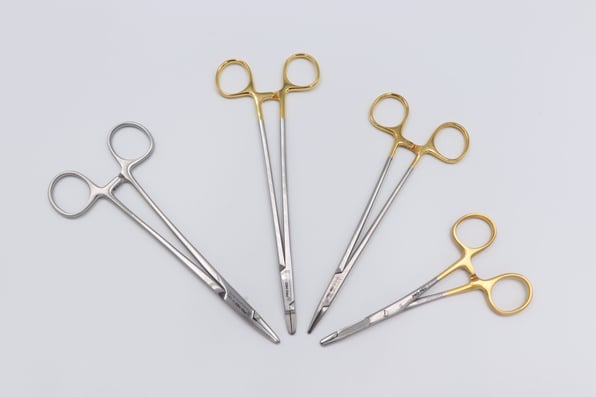
Needleholders are one of the most common instruments found in theatres, specialist or medical centres. Hallmark Surgical has over 16,000 different instruments in their range and one question we often get it ‘how much does a Needleholder, or scissor, or retractor cost?” With many styles and variations of Needleholder to choose from, in this article, we are going to cover the three main factors influencing the cost of a Needleholder: The brand The style and size of the Needle holder Stainless-steel jaws or tungsten carbide jaws Let’s explain these further. Brand: Like any item, the brand and the quality and consumer trust that the brand stands for dramatically influence the price. Here at Hallmark Surgical, we offer three brand options to allow you to select the best option for your requirement and budget. These three brands, namely, Pro-Med, Sieger and Sterling, can be differentiated as follows: Pro-Med™ is the best of the best – elite, precision-crafted Instruments machined from a selection of 16 high-grade surgical Stainless Steels and alloys with a matchless quality control record. Strict production controls result in an exceptional quality record of a 1:30,000 return rate, often referred to as the Surgeon’s ultimate Instrument with perfect balance, consistency, durability and function. ProMed has a lifetime guarantee covering you if a quality concern is raised and is premature; it will be replaced free of charge. Sieger™ – professionally machined Instruments utilising volume production methods from 10 different grades of Stainless Steel and surgical Alloys. Used in many Theatres throughout New Zealand and globally, Sieger™ provides excellent economy and performance and is widely preferred for its value for money. A lifetime guarantee also covers you from manufacturer defects and premature failure on all Sieger instruments. Sterling™ is a brand of volume-produced instruments, well machined and finished in high Chromium Stainless Steel at minimal prices. Sterling™ is well accepted by Doctors for clinical use, ideally suited for Outpatient and Emergency Depts. Medical Centres, Ward use and Instruments that are only used occasionally or are frequently lost, such as Ball and Socket Towel Forceps and sharp/blunt Scissors. The style of Needleholder The style and size of the Needle Holder also influence the price. For example, a 15cm common Crile Wood Needle Holder is quite different in price to a 36cm Bariatric Needle Holder or a fine specialised Vascular Needle Holder. Let’s cover the most common styles of Needle Holders and the type of procedures they’re used for. Derf Needle Holder: A Derf Needle Holder is straight with serrated jaws, a central groove and a length of 4-3/4 inches commonly used for 5-0 and 6-0 sutures. A Derf Needle Holder is often used for ophthalmic, dental, or plastic surgery procedures. The shorter length allows the Derf Needle Holder to be easily controlled in smaller surgical zones. A Derf Needle Holder can range from approximately $50 to $370, depending on the brand and whether it has a tungsten carbide insert in the jaw. Halsey Needle Holder: A Halsey Needle Holder has smooth or serrated jaws and narrow shanks. Initially designed for ophthalmic surgery, this needle holder can grasp the suture and pass it through delicate tissues. More commonly used for general minor procedures such as plastic surgery and dermatology. The smooth jaw option will cause minor damage to the needle, whilst the more popular serrated jaws will hold the needle firmly. A Halsey Needle Holder ranges from just under $60 to $420 depending on the brand, serrated or smooth jaw and if a tungsten carbide insert jaw is chosen. Crile-Wood Needle Holder: A Crile-Wood Needle Holder is designed with a dependable non-slip crosshatched surface and a serrated jaw. Available with smooth or serrated jaws, curved or straight tips and tungsten carbide inserted tips. Crile-Wood needle holders are similar to Mayo-Hegar, but the end tip is finer and gently tapered. Crile-Wood needle holder is the most commonly used need holder for general surgical procedures, with 3-0,4-0,5-0, 6-0 sutures. It is available in various lengths, 15cm, 18cm and 20cm. A Crile-wood Needleholder ranges between $60 and $460 in price. Mayo-Hegar Needle Holder: The Mayo-Hegar is one of the most used needle holders in operating rooms. Mayo-Hegar Needle Holders are the most used needle holders; the needle holders have a wide cross-serrated tip and handle larger, heavier suture needles. A thick shank helps to hold the needle securely. Mayo-Hegar needle holders are available in sizes from 14cm to 40cm. Small sizes can be used for oral, gyne or minor procedures; large needle holders are used for deep suturing or bariatrics. Pricing on Mayo-Hegar Needleholders ranges from $55 to $1200. Olsen-Hegar Needle Holder: Olsen-Hegar Needle Holders feature a scissor built into the jaw for a two-in-one combination. The jaws are available in smooth or serrated, while the combination construction allows for suturing and suture cutting without changing instruments. A range of lengths are available from 12cm to 18cm, and they are all available in both stainless steel and tungsten carbide tips. Olsen-Hegar needle holders are different to use compared to standard Needleholders. The cutting blades often create resistance when using the Needle holder, as they are constantly touching when opening and closing. This is perfectly normal but is not appreciated by some users. Pricing for Olsen-Hegar Needleholders ranges from just over $110 to $575. Stainless Steel vs Tungsten Carbide: Tungsten Carbide material is exceptionally durable and has a much longer working life. As a result, it is used in reusable surgical instruments to enhance their performance and longevity. In addition, needleholders with tungsten carbide tips grasp more securely than their stainless-steel counterparts. Although the tool’s base is crafted with stainless steel, the tip of the tool’s blade or the end of the utensil is made from tungsten carbide. Tungsten falls between 8.5 and 9 on Moh’s hardness scale (diamonds have a hardness of 10). Because of these improvements and benefits, Tungsten Carbide Needleholders is often 2-3 times more expensive than stainless steel alternatives. However, despite this cost increase, Tungsten Carbide Needleholders are much more common than stainless steel Needleholders. Another benefit to tungsten carbide tips is that they tips can be replaced. This means that once a Needleholder wears out, you may not need to replace the entire instrument, saving some cost for ongoing use. Most manufacturers colour the handles gold to signify whether a Needleholder has tungsten carbide tips. However, if the colour coding has worn off over time, you may be able to see a small line at the tip, marking where the tungsten carbide inserts sit. We trust you have found this information helpful and valuable. If you would like to discuss your exact Needleholder or instrument needs, contact the team today! Review our full general instrument catalogue.

View More
histology-containers

5 Common problems with Histology Containers

Histology containers or specimen containers are a common item in most departments of a hospital. They range in size from 20ml pots to 10L containers for very large specimens. The most common size used is approximately 60-70ml. This container is typically provided pre-filled with formalin, meaning specimens can be quickly processed and sent to the laboratory, and formalin handling is kept to a minimum. This article will point out the common problems with the standard pre-filled histology container that you may not have considered before. They are issues that you should take steps to resolve or minimise in your organisation. Histology Container problems you may not have considered: Loss of fine specimens. Formalin exposure to staff. Formalin spill and leak risk. Formalin contact with biopsy devices. Inability to use in the sterile field. Loss of fine specimens: Every specimen sent to the lab is critical for comprehensive diagnosis and patient outcomes. However, in some cases, specimens can be lost in transit on the way to the laboratory. This is mainly when very small specimens are present in fields such as urology or gastroenterology. The best way to avoid your specimens being lost is by using cassettes. This allows you to secure the sample before sending it to the laboratory, eliminating the possibility of the sample being lost. Formalin exposure: Formaldehyde is a known human carcinogen that affects health in many negative ways. Either when a person is exposed directly or through inhalation. Long-term exposure to Formaldehyde has been proven to be associated with an increased risk of cancer of the nose, nasopharyngeal and lung cancer. Short-term exposure can also cause serious health risks: Inhalation: Increased exposure to Formaldehyde can cause severe pulmonary reactions to the upper respiratory tract. Eyes: Irritation resulting in redness, itching, burning and tearing. Skin: Allergic reaction and dermatitis, as experienced by many working with Formaldehyde. The issue with pre-filled histology containers is that when a specimen is processed, a nurse is exposed to formalin vapour when opening the lid. This danger is significantly increased in high-use applications. Several innovations are being used now around the globe to eliminate formalin exposure. The two leading solutions are sealed filling stations, such as the Milestone Ultrasafe system – or the BiopSafe Histology container. Formalin spill risk: Spillage of histology containers is perhaps the most recognised issue in the industry. This not only significantly increases vapour exposure, as covered above, but can bring healthcare teams into direct skin contact with formalin causing allergic reactions and discomfort. Using pre-filled containers has efficiency benefits and reduces the need for filling containers, which has significant exposure risks but dramatically increases the risk of spillage. Most spillages occur when containers are left open during a procedure. Innovations like the BiopSafe Histology container provide an efficient method for specimen handling in your department without the associated risks of traditional pre-filled containers. Find out more about BiopSafe here. Formalin contact with Biopsy Devices: Many nurses or consultants use the liquid in a pre-filled histology container to help retrieve samples from core biopsy needles, biopsy forceps or other devices. This is often done by dipping the device into the formalin and swirling it around to release the specimen. This practice brings formalin into direct contact with the device, which may be reused for subsequent specimen retrieval. Instead of this practice, you should consider using biopsy capsules, foam pads or specimen paper. This allows retrieval of the specimen without any contact with the carcinogenic substance of formalin. Inability to use in the sterile field: Formalin or Formaldehyde as a tissue fixation substance cannot be sterilised. This does cause some issues with processing samples from the sterile field. Users currently either hold specimen pots on a back table or away from the sterile field, requiring samples to be transferred across the OR for processing, or use sterilised empty formalin containers that need manual filling and therefore increased exposure. Once again, innovations such as BiopSafe provide a significantly improved solution due to the unique design advantages. In this case, the BiopSafe container can be sterilised through CSSD, leaving the lids containing formalin in the OR. The pot can remain in the sterile field, and once a specimen requires fixation, the BiopSafe lid can be screwed on and the formalin released. This both eliminates exposure to staff and provides a sterile histology container. So there are five common problems with Histology Containers and the potential solutions available. If these are problems you have in your department and organisation, and you would like to review possible solutions for them – please reach out to the Hallmark Surgical team today!

View More
bipolar-forceps

What are the top things to consider when purchasing Bipolar Forceps?

So you use Bipolar Forceps in some, many or all of your procedures. You want to know how to get the best Bipolar Forceps for your unique requirements. You have to make sure the solution is cost-effective, the equipment is reliable, compatible with your generators, and most importantly, keeps your surgeons happy! We’ve focused on electrosurgical equipment and bipolar forceps for over 15 years and provide this equipment for over 30,000 procedures every year! So, to help you out, we have put together a list of the top things to consider when buying Bipolar Forceps. The top question we get asked by customers is, should I be considering reusable or single-use Bipolar Forceps? The main thing to consider here is reusable forceps tend to be 20-40 x more expensive than disposable forceps. 20x for a general Forcep used in general surgery or breast surgery. 40x for specialised forceps used in neuro, spinal or ophthalmics. Reusable Forceps are mainly known and used because of the range of tip sizes, lengths, and materials you can get – titanium etc. However, there are problems to consider with reusable forceps – this is mainly around insulation failure and damage to expensive reusable Forceps that many departments and hospitals experience. An example of this is when your Sterile Services undergo hipot testing on all forceps. Your reusable Forcep stocks can be significantly depleted without warning because they fail hipot testing. If you are experiencing this, one helpful method that can be implemented in your department is the use of Instrument Cassettes to maintain the integrity of your Bipolar Forceps. If you would like to investigate this, reach out to our team today. Now onto Disposable Forceps – we are seeing a large number of Hospitals transfer their usage onto disposable for three key reasons: You get a perfect tip and insulation for every procedure, ensuring patient safety. You have a known cost for every procedure, its budget-able, and you have no more surprises that come with the replacement of reusable Forceps unexpectedly. There is a Forcep available for every procedure – you no longer have to chase forceps through sterile services because you are low on stock of reusable ones. What cable do you require? The second thing to consider when buying Bipolar Forceps is the Cable you require. There are two main Cables here in New Zealand – number one is what we refer to as the moulded plug cable (see image a. below), and number two, we refer to as flying lead or separate lead cable (see image b. below). The vast majority of modern Generators are compatible with the moulded plug cable, so this would be the solution for most of you. However, if you have an older Generator, you may need the flying lead or separate Cable. Reusable forceps come without a cable, so you must purchase this separately. You aren’t tied to using a reusable silicone bipolar cable with your reusable Forcep – they are also compatible with a disposable cable. Using a disposable cable can be a more cost-effective way for you to proceed. Many hospitals find that reusable cables fail prematurely – they can get run over by trolleys or just damaged in general. They are a high wear item. Moulded plug Cable. Flying Lead Cable With disposable forceps, you have a few more options – number one – it is available in the same format as reusable forceps without a cable, and then you can mix and match with a cable of your choice. However, with disposable, most of our customers prefer to use a forcep and cable complete – this is one less item to stock, one less item to set up before a case. It is generally a more efficient way to do it. Note that all disposable forceps with cable complete come with the moulded plug connector, not the flying lead. So, if you have an older machine – speak to us for a flying lead cable complete with the forcep. Non-stick or standard tips? The next thing to consider is whether you require non-stick tips or standard stainless-steel tips on your bipolar forceps. Non-stick tips are designed for delicate surgeries as they do keep tips cleaner, reduce smoke and charring and therefore, visibility is better. They use the silver material for their non-stick properties – in reusable – the entire tip is silver. In disposable – they use a silver insert to keep costs down, a little like tungsten carbide inserts on needleholders. For your reference, in the Hallmark range – in both reusable and disposable forceps – a black forcep means it has non-stick capabilities. Stainless-steel tips are best for everyday general requirements. The main reason for this is cost saving. For example, a reusable stainless-steel tipped forcep can save as much as 25% cost than a non-stick. In disposable, it can be as much as a 50% cost saving using stainless-steel tips over non-stick tips. So, this is something to consider if non-stick is not required, but you have to keep in mind your surgeon preference. So there you have it – the top things to consider when purchasing Bipolar Forceps. Be free to reach out to the team today to discuss your individual situation and needs. View Catalogue (see pg. 11) Request samples Request pricing Book an appointment with a Product Specialist – Zoom or F2F

View More
lumeneye-4

Top 5 Questions Colorectal Surgeons have about LumenEye®

Over the past few months, the team at Hallmark Surgical have been talking to a wide range of colorectal surgeons and nurses about the new LumenEye® X1 system. Through these conversations, we have answered many questions about the system, and many of our clients had the same or similar questions. In this article, we want to cover the basics of the LumenEye® X1 system and answer some of the common questions we are being asked! The top 5 questions we are being asked on the LumenEye® X1 are: What is LumenEye®? Does LumenEye® work with normal rigid sigmoidoscopes? Apart from high-definition visualisation, how is it an improvement on rigid sigmoidoscopes? How do I clean it? How much does it cost? What is LumenEye®? The LumenEye® X1 is what we like to refer to as a revolution in rigid sigmoidoscopy. Let us explain! Remaining essentially unchanged since the 1800s, the sigmoidoscope has dropped in popularity with consultants around the globe for the limitations in visualisation and capability and with the advancement in flexible sigmoidoscopy. However, it still represents a very cost-effective, fast method for bowel examinations. Mr Fareed Iqbal, a Colorectal Registrar in the UK, understood this situation and set out to revolutionise rigid sigmoidoscopy and bring it into the 21st century; hence LumenEye® was born! The system comprises two main parts: the portable equipment case and a consumable scope and manifold set. The case houses the control module, a tablet with an inbuilt keyboard for controlling the CHiP software platform, and the reusable handpiece. This handpiece then connects to the disposable scope and manifold set when used. Does LumenEye® work with normal rigid sigmoidoscopes? No, LumenEye® cannot be used with normal rigid sigmoidoscopes. Therefore, if you use LumenEye®, you will need to use the device-specific consumable scope. Let us explain why. Most current rigid sigmoidoscopes come with in-built lighting or connect to an external light source. With LumenEye®, this is not required, as the lighting is at the end of the lumen on the reusable handpiece, providing exceptional shadow-free visualisation. Current sigmoidoscopes use a 1.5x or 2x magnification lens to enhance visualisation. But, again, this is not required with LumenEye®, because of the use of HD imagery, similar to what is found in endoscopy. Because of these reasons, the scope has to connect to the reusable handpiece. Therefore the design is slightly different to standard rigid sigmoidoscopes. Apart from improved visualisation, how is it an improvement on rigid sigmoidoscopes? This is a great question! As soon as a consultant sees LumenEye® for the first time, they are always blown away by the system’s visualisation. But, what other key improvements are available with LumenEye®? The LumenEye® reusable handpiece has integrated bellows in the handle, removing the need to use single-use bellows for sigmoidoscopy procedures. This reduces the waste in a procedure and therefore is more sustainable than current practices. Due to the scope and manifold design, all insufflation air following a procedure is released through a hydrophobic filter. This improves the protection levels for consultants significantly. LumenEye® provides consultants with the ability to perform biopsy’s under insufflation through the valved 3mm biopsy channel. This can increase the speed of diagnosis for patients and consultants. With CHiP, the platform allows for taking images and videos during examinations. These can then be referred for a second opinion, reviewed for follow-up consultations or used for training. LumenEye® provides significant improvement to ergonomics from rigid sigmoidoscopes. The consultant no longer has to bend for examination but can remain upright, viewing the high-definition imagery on the tablet screen. How do I clean it? The LumenEye® X1 device utilises a single patient use consumable manifold, sheath and obturator set. This results in the reusable element of the device not coming into direct contact with the mucous membrane of the anorectal cavity. LumenEye® is cleaned with a high level of disinfection using the Tristel Trio wipes system, according to international standards. This allows the device to be cleaned between patients and can be used for an entire list. The detailed cleaning instructions utilising the Tristel Trio Wipes System have been performed in accordance with EN ISO 17664 and validated. You can view the full instructions here. How much does it cost? As LumenEye® becomes more common throughout the globe, the cost of the technology is expected to decrease. Currently, in New Zealand, the portable case with tablet and handpiece is between $23,000 – $28,000 NZD. The consumable cost is between $165 – $195 NZD each. The variation in cost does depend on the number of consumables you expect to use. Well, there you have it! The Top 5 questions regarding the LumenEye® X1 System. We trust it has been helpful in your review of the system. If you would like to book a demonstration, trial or speak with a product specialist about LumenEye®, reach out to us today! Further information and videos can be viewed here: https://www.hallmarksurgical.com/product/lumeneye-digital-sigmoidoscope/

View More
manipulator

What are the main differences between the ClearView® Uterine Manipulator and the RUMI® II Manipulator?

Here at Hallmark Surgical, we often get asked – what are the main differences between the ClearView® Uterine Manipulator and the RUMI® II Manipulator? Therefore, we have put together this detailed comparison, including features, pricing, and pros & cons of the ClearView® and RUMI® II, to help you decide which is best for you. The main features to consider when choosing a Uterine Manipulator are as follows: Range of tip movement Tip sizes and Colpotomy Cup sizes Assembly Ease of use Hygiene or cross-contamination risk Price Ease of ordering and inventory management Both devices are available in two versions: Manipulator for standard procedures Manipulator with occluder balloon and colpotomy cups for performing TLH’s. This article focuses primarily on the TLH version. Let’s discuss further, each of the features listed above. Range of tip movement: The range of tip movement is important for a Uterine Manipulator to enable greater visibility and access. RUMI® II provides 140° of total tip movement – 90° anteversion and 50° retroversion as well as lateral motion. The ClearView® provides 210° of total tip movement, the greatest range of motion of any Uterine Manipulator – 120° anteversion and 90° retroversion as well as lateral motion. This range of movement provides superior visibility and access to the posterior cul-de-sac and perivascular space. An excellent degree of anteversion is ideal for hysterectomies and complex endometriosis such as rectovaginal disease; when you need a good level of anteversion to get at the back of the cervix and overlying the rectum for suitable dissection. It also helps manoeuvre into the correct plane for that type of surgery. Other procedures that benefit from the excellent range of motion include – Salpingectomy, Ectopic pregnancy, Adhesiolysis and other Laparoscopic procedures. In cases of severe endometriosis, a good level of uterine mobilisation and elevation is required, especially when the disease affects the recto-vagina and cul-de-sac. Tip sizes and colpotomy cups: The RUMI® II has six different tip sizes – 3.75cm, 6cm in two different diametres, 8cm, 10cm, and 12cm. These are available to purchase as required, in boxes of 5 units. The Koh-Efficient™ (colpotomy cup and occluder balloon component) has four size options – 2.5cm, 3cm, 3.5cm, and 4cm. Again, these are available to purchase as required, in boxes of 5 units. For the ClearView® – the tip is part of the ClearView® device rather than an additional component to attach. The ClearView® device comes in two different tip sizes, and each device is supplied with a 1cm spacer so you can reduce the tip length by 1cm. This gives you, in effect, four tip sizes to choose from. The more common choice is the 6/7cm model; there is also an 8/9cm model. Each ClearView® device is supplied in a sterile kit that includes three different colpotomy cups – 3cm, 3.5cm, and 4cm. Assembly: To assemble the RUMI® II – you require three components – firstly, you have the main body, a reusable stainless steel item. Secondly, you need a disposable Tip. Thirdly, the Koh-Efficient™ (the colpotomy cup and occluder balloon disposable unit). These are all stocked as separate items in various sizes to be selected before the procedure. To assemble – firstly, choose the correct tip size based on the uterus sounding, place it on the handle and gently twist 180° to lock into place. Next, insert the tubes into the Catheter Management System on either side of the handle. Then, guide the Koh-Efficient™ assembly over the tip you have just placed on the RUMI® II handle, match the white arrow on the Koh-Efficient™ to the black arrow on the RUMI® handle and snap it into place. Next, confirm that the Koh-Efficient™ is resting on top of the handle rails and then pull back until the Koh-Efficient™ is around the handle and locked in place (you will hear a click). You are now ready for insertion. The ClearView® is an all-in-one device with the tip and die injection tubes part of the main body of the ClearView®. The ClearView® is supplied in a kit complete with all items required for the procedure, ready to use, including a 10ml Syringe, 60ml Syringe, Uterine Sound-Dilator, a tip spacer and three different sized Colpotomy cups. (When using the RUMI® II, these items have to be used as separate off-the-shelf items). To assemble the ClearView® for TLH, choose the correct size of Colpotomy cup from the sterile tray and place it over the deflated ClearView® tip until it touches the tip support (or spacer if used). Then, twist clockwise until it snaps into place. You are now ready to insert. If you decide a different size cup is better, you can remove the one fitted and replace it with another one from the kit. This ease of handling and set-up allows technicians and operators of various experience to prepare the ClearView® for insertion. Ease of use: The RUMI® II has a ratcheted locking handle controlled by depressing the trigger. Turning the handle grip while depressing the trigger permits movement of the tip. When the trigger is released, it locks into the desired position. To antevert the uterus – depress the trigger and turn the handle clockwise. Then, release the trigger to lock it in place. To retrovert the uterus – depress the trigger and turn the handle grip counterclockwise. Then, release the trigger grip to lock it into place. The ClearView® has been designed for single-handed use without needing an assistant, which is beneficial when you don’t have many assistants or have a junior assistant who doesn’t have experience in the complex procedure you’re doing. The handle is self-locking at any position – let go of the handle, and it will lock in that position, holding the uterus in place. Clockwise rotation of the handle elevates the uterus to the anteverted position. Counterclockwise rotation of the handle retroverts the uterus. Let go of the handle at any point, and it will hold your position for you. Move laterally by directing the handle to one side or the other. This ease of positioning and locking allows you to use the ClearView® as a robust second port to move the uterus in different directions so you can use your advanced energy device, for example. Hygiene, Cross-contamination risk: Many manipulators are not designed for modern-day surgery having small obturators or channels which cannot be reliably decontaminated. The ClearView® Uterine Manipulator is entirely single-use and is disposed of without disassembly once used. This eliminates all cross-contamination risk. On the RUMI® II Manipulator, the tips, and the Koh-Efficient™ colpotomy cup and occluder balloon component are disposable, but the shaft/handle with the dye injection tubes and snap drum that the tip connects to is reusable and requires sterilisation between each use. With the moving parts, small lumens, crevices and mated surfaces, decontaminating the RUMI® shaft is time-consuming, and whether the cross-infection risk has been reliably eliminated may be questionable. Price: The ClearView® rates quite competitively compared to the RUMI® II. The price for a complete ClearView® Kit, including a 10ml Syringe, 60ml Syringe, Uterine Sound-Dilator and 3 x Colpotomy Cups (see image below), is comparable in price to one box of disposable RUMI® tips only (see image below). On top of this, you have the reusable RUMI® shaft, the Koh-Efficient™ colpotomy cup and occluder balloon component, and the other items required for the procedure, which need to be used as separate off-the-shelf products when using the RUMI® II for a TLH. Ease of ordering and inventory management: An inventory benefit of the ClearView® is that you only have to stock a maximum of four line items or SKUs – 2 x standard models and 2 x TLH models. In practice, most hospitals only stock one of each model as this covers nearly 100% of procedures. Each kit includes the ClearView® plus all accessories you require for the procedure. With the RUMI® II, you can carry up to 14 line items on top of the reusable RUMI® II handle shaft – 6 tip sizes, 4 Koh-Efficient™ sizes, 10ml syringe, 60ml syringe, uterine sound and uterine dilator. Another way of looking at this is that the RUMI® II has an extra three sizes of tips available (12cm, 10cm and 3.75cm) and the additional 2.5cm Koh-Efficient™ option. It does pay to consider the minimum order quantity of the RUMI® tips and Koh-Efficient™ colpotomy cup and occluder balloon components – a box of 5ea. Some sizes are not commonly used and may expire before you can use them all. The decision on which Manipulator is best for you falls into a few easy categories: Ease of use Range of tip movement for effective manipulation Fully disposable versus reusable/single-use combination Price In summary, it’s up to you to choose which Manipulator is best for you. You can view Instructions for Use and videos for both the RUMI® II and the ClearView® on the links below. ClearView® Total for TLH: IFU: https://www.hallmarksurgical.com/product/clearview-total-manipulator/ Video: https://www.hallmarksurgical.com/resources/?post_name=&categories=video&tags=any RUMI® II: IFU: https://www.hallmarksurgical.com/wp-content/uploads/2022/09/0d87901f-8032-4a1e-967e-dfa0515e4334_RUMI-II-Procedure-Guide.pdf A surgeon’s testimonial and description on using the ClearView® can be viewed on this webinar link “Manipulating the Uterus, Best practices in Gynaecological Procedures” presented by Mr. Fevzi Shakir, BSc(Hons) MBBS MRCOG MSc in conjunction with Laborie: https://education.laborie.com/manipulating-the-uterus-best-practices-in-gynaecological-procedures?submissionGuid=615b1c23-fe5f-4bb7-a23f-66398b3010e8 Should you wish to try a sample of the ClearView® or discuss any questions with one of our Product Specialists, simply reach out to us.

View More
haemoband

Haemoband vs. KilRoid vs. Sapimed: Which Haemorrhoid Ligator is best for you?

At Hallmark Surgical, we often get asked why we have chosen to work with the Haemoband device and how it compares to other Haemorrhoid Ligators available. If you are a Colorectal Surgeon or Nurse, you will know that there is a range of Haemorrhoid Ligators available on the market. Therefore, we have put together this detailed comparison, including features, pricing and pros & cons of the three main ligators used in New Zealand – Haemoband, KilRoid and SapiMed. To start with, let’s look at a comparison summary outlining the pros and cons of each on a scale from one to five: As can be seen, by the chart, each ligator has its advantages and disadvantages. So, let’s discuss further the rating on each of these points. Setup Time: Time equals money. And in both setup and procedure, any time saving not only allows you to reduce appointment times and get more into every clinic, but it also reduces anxiety for patients. Haemoband stands out for the time it saves you in setup. This is due to its clever pre-loaded design. With four bands pre-loaded onto the device’s tip, the Haemoband can be used straight from the packaging, with the connection of suction tubing being the only setup required. KilRoid saves you time during setup as it comes with pre-attached suction tubing. However, significant time is required to load bands onto the device’s tip, with two separate loading cone devices used. The SapiMed LEM device does not come with suction tubing attached. It is similar to the KilRoid in its band loading procedure, requiring significant setup time than Haemoband. Length of Procedure: Again, due to Haemobands best-in-class pre-loaded band system, it provides you with the shortest procedure length, allowing you to continuously band multiple haemorrhoids without removing the device from the anoscope or proctoscope to reload. A clinical study conducted with the Haemoband device shows that 96% of procedures took 2 minutes or less to complete. Both KilRoid and Sapimed LEM have to be removed between each haemorrhoid and reloaded. Therefore your procedure time with these devices is significantly longer than with Haemoband. In addition, KilRoid scores lower than Sapimed LEM due to the complexity of using a double loading cone system to load bands compared to Sapimed LEM’s single cone. Nursing Assistance: Nursing time is a significant expense to any healthcare organisation, irrespective of whether you are a small practice where your receptionist assists with nursing or a busy outpatient department with several nurses on the team. Haemoband does not require any nursing assistance because all bands are pre-loaded on the device. This allows your nursing team to focus on other tasks. When using both KilRoid and Sapimed LEM, many consultants prefer to have a nurse assisting during the procedure to load bands between haemorrhoids, preventing them from helping in other areas of the department or practice. Suction Control: Most haemorrhoid ligators are designed to be used with suction. This allows the haemorrhoid to be drawn into the tip of the device before a band is released. Two aspects of suction are reviewed in this comparison; Suction control and suction pressure/flow. Suction Control is the amount of control the surgeon has over the suction flow. Haemoband’s dual-action trigger allows the surgeon to block all suction flow (when the trigger is in its natural position) or apply maximum suction strength when the trigger is retracted halfway. This is unique and offers the surgeon the most control of the three devices. With KilRoid and Sapimed LEM, suction control is managed through a standard suction void. When the void is open, a large proportion of the suction escapes from the void reducing suction flow at the tip; when the void is covered, the suction flow is concentrated to the distal tip. Band Quality: Traditionally, ligation bands have been manufactured by being cut off long tubes of moulded material. This is why you often get irregular edges on ligator bands. The main disadvantage with this manufacturing method is the impact on the strength of the band. Because the bands are cut from a tube, small rubber fibres are being severed, and the overall integrity and strength of the band is diminished. Both KilRoid and SapiMed use this method in the creation of their bands. Up until the mid-2010s, Haemoband also used this method. However, the weakness of standard ligation bands, coupled with the pre-loaded feature, meant that the bands were often stretched and didn’t provide good clinical outcomes. Therefore, Haemoband made a major change and now every band on their banders is individually mould. Cutting is therefore eliminated and the rubber fibres remain complete. The result is greater band strength and elasticity. In addition, the added strength and size of the Haemoband bands means that double banding is not required with the Haemoband device. Based on this, and the larger size of the Haemoband ligator bands, Haemoband scores highly for their band quality. KilRoid outscores Sapimed as the Kilroid bands are significantly larger than SapiMed but smaller than Haemoband. Cost Comparison: Haemoband is the most expensive out of all three bands, between $38-$50. Pricing depends on the volume used and whether you choose to include suction tubing, proctoscopes or both in the Hallmark Surgical haemorrhoid kits. See more about the Hallmark Surgical kits here. KilRoid is comparable to Haemoband in price, between $30-$35, while SapiMed is closer to the $10-$15 range. Unfortunately, neither KilRoid nor Sapimed have kits available with other necessary equipment for haemorrhoid banding procedures. Disposal: We often receive comments by concerned consultants about the disposal of Haemoband due to the apparent size of the device in comparison to the likes of KilRoid or Sapimed. Therefore, we have compared the weights of all devices to provide a analytical approach to the disposable comparison. The Haemoband Ligator is the heaviest of all three ligators at approximately 120grams. The device is almost all plastic, except for one spring in the internal handle mechanism. KilRoid weighs 95grams, which includes the pre-attached suction tubing. Unfortunately, for this comparison, the suction tubing cannot be removed from the ligator handle. Sapimed weighs 35grams, making it the lightest ligator and the smallest for disposal. Visualisation: Visualisation of the surgical site is vital in all procedures, and ligator is essential in this, especially when working in the narrow confines of a 22-26mm proctoscope or anoscope. Haemoband has the largest tip diameter at 15mm. However, it does feature a clear tip end and a shaft diameter of only 6mm, which is the section of the device that occupies the proctoscope channel during the procedure. Haemoband bands are highly visible, being green in colour, which assists in visulisation. KilRoid has a 12mm diameter tip, and this diameter is maintained for the whole shaft. An interesting difference with KilRoid is that the bands are the same colour as the end of the device, making it hard to distinguish these and tell whether the band has been released. Sapimed scores best in visualisation with a tip diameter of 12mm and a shaft diameter of 10mm. A point of difference with SapiMed is that it has a 20 degree angled tip, allowing for better visualisation and black bands to assist with identifying when the band has been released. Hygiene: The number one hygiene concern with haemorrhoid ligators is the band reloading procedure. The Haemoband Ligator incorporates both suction control and band releasing into its dual-action trigger system. This provides a simple one-handed operation, and once inserted, the device does not need to be removed from the proctoscope between banding to reload bands. KilRoid, as already discussed, needs to be removed between each haemorrhoid and reloaded. As known by many users, this is a very unpleasant task. KilRoid assists the user by providing a double loading cone system designed to prevent the user from touching the tip directly. SapiMed LEM has the lowest score as the reloading procedure requires direct contact with the device tip in comparison to KilRoids double cone system. Ergonomics: Haemoband is renowned for its ergonomics. As designed for surgeons by surgeons, this has been a key part of the Haemobands value. Not only does it sit very comfortably in your hand, but the surgeon has also precise control over the suction flow and band release through a strong positive trigger action. In addition, the Haemoband device has specially designed ridges on the tip, meaning only one band can be released at a time, and the surgeon is in no doubt each time a band is released. The KilRoid device is a 12mm Tube that runs in the same diameter from the tip to the suction tubing, providing limited ergonomic shape or support. Firing the band is achieved by sliding a plastic tab and frame forward along tube with your thumb. The plastic tab needs to be retracted again before loading a new band; there is no auto-retract or spring action in the device. The SapiMed LEM device is a small pistol shape mainly constructed from a single moulded piece. However, this device does have a trigger for firing bands that automatically retracts once released. This added design feature means it scores higher than the KilRoid device. Summary: All devices compared are manufactured by high-quality medical device companies in Europe, and as shown above, each has their key benefits and features, and are preferred by end-users for different reasons. In our view, you should consider SapiMed if you are looking for the lowest cost trigger action haemorrhoid ligator. Of course, you will have to forgo key benefits such as reduced procedure setup and duration, band quality, and suction control, but you will have a competent, cost-effective bander with a low waste impact. KilRoid should be considered by users who are familiar with the KilRoid design. The firing mechanism is quite different in method to the trigger-style of SapiMed and Haemoband. Nevertheless, KilRoid is a good all-rounder, which is reflected in its medium price-point. Like SapiMed, you will have to forgo key benefits such as reduced procedure setup and duration and suction control, but you will have an reliable bander with good quality bands. Haemoband Ligators should be considered by consultants who want the best equipment and devices. As clearly shown by the above comparison, it is the market leader. If you are willing to manage the extra cost and feel the clinical benefits outweigh the increased waste impact, Haemoband is for you. You will get a device the greatly reduces your procedure setup and duration, reduce your dependence on your nursing teams, and have excellent clinical outcomes through market-leading band quality and suction control. We trust you have found this to be of interest. Hallmark Surgical is committed to being a market leader in Colorectal equipment and devices and welcomes any questions you may have about haemorrhoid banders or other devices. View our Colorectal Catalogues here View a Haemoband demonstration video here

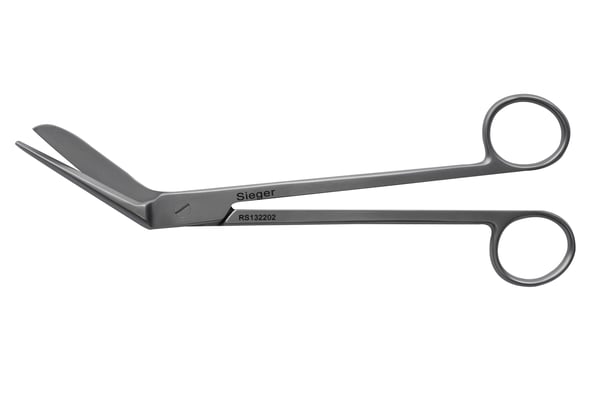
View More

Three Ergonomic And Efficient Single-use Medical Instruments From Hallmark Surgical

It is impossible to check that some types of reusable clean – and therefore sterile. The processes and length of time taken in effort to clean such instruments is slow and laborious and not being able to verify sterility means cross-contamination is a high-risk scenario. Disposable surgical instruments are the safest and most cost-effective solution to this problem. Disposable or single use instruments are guaranteed clean and sterile and provide a brand new device for every procedure. Hallmark Surgical is an advocate of the use of disposable medical devices and have been constantly innovating their range with world-leading devices for over 10 years. Here are three cutting-edge devices that will make your work easier and faster: SOLO™ HAEMOBAND PRE-LOADED SUCTION BANDER Our SOLO™ Haemoband Ligators and range of Proctoscopes and Anoscopes are designed to help doctors treat mild to severe haemorrhoid cases, ensuring comfortable, fast and efficient procedures. The SOLO™ Haemoband Pre-Loaded Suction Bander has been designed by Surgeons to reduce procedure time by 40-50%. All requirement to remove and reload the bander after each band is fried is removed. Preloaded with 4 bands, which have been individually molded and tensile tested, you can be assured that one band is sufficient for a haemorrhoid, eliminating the need to double-band. The trigger activates both the suction flow and band release and a large distal tip allows the ideal volume of haemorrhoidal tissue to be held and secured by the band. The Haemoband is very easy to use and gives you the ultimate control and speed. Kit options are available with a self-lighting Proctoscope and/or suction tubing. Free samples are readily available for trial. SOLO™ CLEARVIEW UTERINE MANIPULATOR Uterine manipulation is an essential component of laparoscopic procedures. The ClearView gives the surgeon excellent visualisation during surgery. By using this premium quality device, you can maximise efficiency and improve patient outcomes. One of Hallmark Surgical’s most popular Gynae devices is the SOLO™ ClearView Uterine Manipulator. Supplied in a single kit with all required components, it is fully disposable. ClearView provides the greatest range of motion of any Uterine Manipulator available – a complete 210° of movement – 90°anteversion and 120° retroversion. The manipulator’s rotating control handle enables one-handed control and can be set in place allowing you to free your hands. The complete ClearView kit contains the manipulator, uterine sound, syringe and dye injector. You can choose between two tip lengths – the 6/7cm tip or the 8/9cm tip. A second version has been designed specifically for laparoscopic procedures where it is desirable to locate the position of the vaginal fornices, typically during Total Laparoscopic Hysterectomy (TLH). The ClearView TOTAL kit includes colpotomy cups in three different sizes and a pre-attached occluder balloon: Colpotomy Cups: The Colpotomy cups are designed to enhance visibility during the procedure. The colpotomy cups are made from a proprietary material which, unlike many other colpotomy cups, can be used with both electrosurgical and harmonic scalpels. Their signature bright teal colour makes them easy to identify during the colpotomy incision. Occluder Balloon: The occluder balloon serves as a seal, preventing the loss of the pneumoperitoneum after the colpotomy incision. Using the syringe, you fill it with 60-120cc of sterile saline. Saline solution provides a clearer image on the ultrasound monitor. ELECTRISURE™ ELECTROSURGICAL BIPOLAR FORCEPS Electrosurgery is a surgical procedure that requires high-frequency electricity for cauterizing or cutting tissue. For great precision and ease of use, the Electrisure™ range of Bipolar Forceps including the popular Adson Bipolar Forceps are ideal for streamlining electrosurgical operations, making it easier for the Surgeon and increasing the consistency of the outcomes. Eschar build-up on the forcep tips produces toxic surgical smoke during operation, which can be harmful to the medical professionals involved. Electrisure™ non-stick bipolar forceps, complete with a Silver insert within the tip to create a low-smoke tip, are designed to lower those risks by reducing the amount of surgical smoke plume and tissue charring. Hallmark Surgical has a very broad range of world-leading single-use medical devices exclusively available in Australasia through Hallmark Surgical alone, from gynaecological devices to colorectal, orthopaedic and electrosurgical instruments. Be free to reach out today with any questions or if you would like to trial free samples. We are here to reduce infection risks, reduce costs and simplify and enhance your procedures.

View More
reusable-devices

The Hidden Environmental Impact Of Reusable Devices

One of the points of discussion regarding the usage of reusable and single-use medical instruments is their sustainability and environmental impact. Reusable devices are often preferred due to their lifespan, which may appear as the economical choice. On the other hand, single-use devices are believed to be wasteful, and once disposed of, accumulating in the landfill and harming the environment. However, reusable devices may be the less eco-friendly option. THE ENVIRONMENTAL COST OF DECONTAMINATING REUSABLE DEVICES Very strong chemicals are used in the decontamination and sterilisation of reusable medical devices. These chemicals are strong enough to be damaging and harmful to human health, yet alone the environment and aquatic life when disposed of. On a global scale, these chemicals are also partly responsible for the contamination of groundwater sources of portable water. However, single use devices are packaged in recyclable materials. Compare the copious amount of chemicalized water and electricity usage needed to sterilize one reusable instrument for the waterways, to the one contained single use device with recyclable packaging, for the landfill. The strength of the chemicals mean the smallest amount of water will still damage whatever it comes into contact with – habitation or life. And water can’t disappear, it will soak into the ground or end up in the sea. SINGLE-USE INSTRUMENTS: SAFER AND ENVIRONMENTALLY FRIENDLY To reduce health and environmental affects and also allow you to work quicker and smarter, we offer a full range of single use Instrumentation. Disposable suctions are becoming more and more demanded as ensuring reusable cannulae are 100% clean and risk-free is impossible due to the narrow and curved lumens. Single-use suctions eliminate the risk, the cost, and the time needed for re-processing reusable devices. With quality UK made Suctions, single use Suctions feel the same as a reusable device for the surgeon and provide excellent results. SUSTAINABLE SURGICAL SOLUTIONS As a trusted provider of healthcare supplies, Hallmark Surgical operates with a corporate responsibility to the environment. All areas of our operation, from manufacture to delivery, are aligned with the best practices recognised globally. Our years of knowledge and experience in the industry have given us extensive knowledge of the needs of the market. We are committed to providing high-quality medical devices that allow our clients to provide an exceptional level of care. Contact us today today for any enquiries or to try a free sample of any of our products.

View More
speculum

Disposable Vaginal Speculum Make Ob-gyn Practices More Efficient

Disposable vaginal speculum allow Women’s Health practices to run smoothly and efficiently saving both time and money. THE RIGHT PRODUCT FOR THE PROCEDURE When using reusable speculum, it is not always possible to have several speculum types to suit each type of procedure. However, when using disposable speculum, you haven’t invested in the cost of the reusable speculum, so you can afford to choose a few different styles to cater to each procedure type or Surgeon’s preferences. This is especially easy when working with a supplier who allows ordering in eaches rather than box quantities saving you both money and storage space. Choosing a supplier who has a variety of speculum to offer will also help simplify ordering and communication for you. REDUCE DOWNTIME Having to wait for re-processing of reusable speculum can be quite a problem as is the monitoring of wear and tear as the Speculum is constantly sterilized. Using disposable vaginal speculum provides you with a brand-new product every time, guaranteed sterile and ensures you have the speculum available when you need it. No bubbling and cracking of insulation, no waiting for it to be reprocessed, no need to double-check it is truly clean. It is important that you are working with a supplier who can guarantee you immediate supply of your orders, so you never run out. If using Hallmark Surgical for ongoing orders, we will guarantee you stock on hand for immediate delivery always. INCREASED PATIENT COMFORT Disposable vaginal speculum are manufactured using robust surgical-grade plastic which is obviously considerably warmer compared to metal speculum saving time again. Plastic has a less invasive feel being more giving than the metal speculum and some designs with the frosted finish like the Speculum Easy-Spec; are particularly comfortable for the patient providing a significantly smoother entry. (Run your hand along frosted versus non-frosted and you will feel the difference!) Silent open/close mechanisms available on disposable vaginal speculum are more reassuring to the patient also. If you are trying to find a highly flexible but unbreakable disposable Speculum – check out the Speculum UltraSpec; new in from England. It even has smoke extracting and sidewall prolapse retractor accessory options available! CORDLESS LIGHTING No battery, no Charger, no Cable, complete freedom of movement! Disposable speculum are available with inbuilt, self-contained LED Illumination for cordless lighting. This provides excellent visibility and the whole unit is designed to be disposed of immediately after use. Choose the right speculum for each procedure and order in each at the same special price. Prefer the frosted finish for ease of insertion, need highly flexible and unbreakable, select your smoke extracting choice, need the sidewall prolapse retractor accessory, self-illuminating for cordless lighting and no waiting for charging devices. Contact us today to try free samples or ask a question, we are here to help and confident we will have the right Speculum for your need.

View More
frazier-suction

Disposable Frazier Suctions Guarantee No Cross-Contamination

Providing the highest level of service and medical care entails the use of the most efficient tools on the market. Medical professionals are held to a rigorous performance standard; so are the devices and instruments that they use to facilitate care. When it comes to surgical devices, more surgeons are switching from reusable instruments to single-use instruments. This stems from the need to enhance sanitation in the operating room and minimise risks of cross-contamination. OBSERVING SANITATION IN CRITICAL OPERATIONS Some reusable instruments have intricate and movable parts that are difficult or sometimes, impossible to properly clean. Reusing these instruments increases the risk of surgical site infections and cross-contamination. On the other hand, single-use instruments are individually packed sterile and discarded immediately after the procedure. Apart from minimising cross-contamination, the use of disposable instruments eliminates the need for time-consuming and costly decontamination processes as seen with reusable instruments. HIDDEN ENVIRONMENTAL IMPACT You may think disposable items impact the environment however there is a large environmental impact caused by reusable instruments which isn’t often thought of. Large amounts of water, electricity and cleaning agents are required to run the decontamination of reusable devices and the pollution of these strong chemicals which aren’t biodegradable or recyclable like packaging, greatly impacts the environment. To address these concerns single-use surgical devices have become a feasible alternative. One such instrument is Frazier suctions that are used in extracting bodily fluids. Reusable suctions with their narrow cannulas and bends are very hard to clean and impossible to inspect and verify that they are clean. Studies show that reusable Suctions have caused cross-contamination and passing on crippling and life-threatening diseases like Creutzfeldt-Jakob Disease (CJD). Disposable Frazier suctions are the safest option. A single-use suction guarantees that every operation will be performed with a clean and sterilised device. It also minimises the risks of breakage and re-straightening as seen with reusable devices. After each use, the suction is disposed of. This reduces the costs and ecological impact of running decontamination cycles. TRUSTED SUPPLIER OF DISPOSABLE SURGICAL DEVICES Hallmark Surgical is a reliable source for single-use surgical devices. We carry a range of high-quality, disposable instruments for Womens Health, Colorectal, Electrosurgical and General Surgery. Our range of disposable Surgical Suctions manufactured in the UK are becoming more and more requested, being excellent quality and very ergonomic. It is hard to feel the difference between these and a reusable device. The disposable Frazier suction is one of the most popular items in the range. It is designed with a rigid stainless steel lumen that also acts as a probe. The suction is equipped with an ergonomic handle and a suction control port that offers precise suction control. Other options in the range are aspiration needles, intracardiac suctions and laser suctions to name a few. As a trusted supplier of hospital supplies, we are committed to providing high-quality medical devices to uphold the level of care espoused by our clients. Our years of knowledge and experience have given us a deep appreciation for the needs and demands of the industry. From the manufacturing of products to delivery, we carefully oversee every single process to make sure we provide the best products and services. Our corporate responsibility is partnered with an environmental responsibility. We aim to contribute to the sustainability of the environment through our products and operations. Don’t hesitate to contact us for any enquiries or to sample some of our products. You may also sign up for an account on our website to view your pricing and a detailed catalogue. Contact us today.

View More